That grey, splintering timber on your deck is more than just an eyesore-it’s a warning sign that a quick pressure wash won’t fix the problem. You’re right to be wary of contractors offering a cheap ‘clean and seal’, as these shortcuts often lead to a finish that peels and fails within a year, wasting your money. The difference between a temporary fix and a lasting result comes down to a proper, professional deck rejuvenation.
We believe in honest advice and doing the job right the first time. That’s why we’re pulling back the curtain to show you what a genuine restoration involves. In this article, we’ll walk you through our meticulous 9-step process-detailing the crucial work that most competitors skip, from precision sanding to rectifying cupped boards. You’ll gain a clear understanding of what you’re paying for and the confidence that your deck won’t just look new, but will be protected for years to come.
What Deck Rejuvenation *Really* Means (And What It Isn’t)
Many homeowners think deck rejuvenation is a quick clean and a fresh coat of oil. This is a costly mistake. Genuine deck rejuvenation is a meticulous, structural process designed to restore the health, safety, and integrity of your timber. It goes far beyond a cosmetic touch-up that looks good for a few months.
The goal isn’t to cover up the damage; it’s to systematically remove it. We address the root causes of a worn-out deck-sun damage, moisture ingress, and physical wear-to return the timber to a like-new condition. It’s about long-term protection and value, not a temporary fix.
The Common Mistake: Pressure Washing & Oiling is Not Rejuvenation
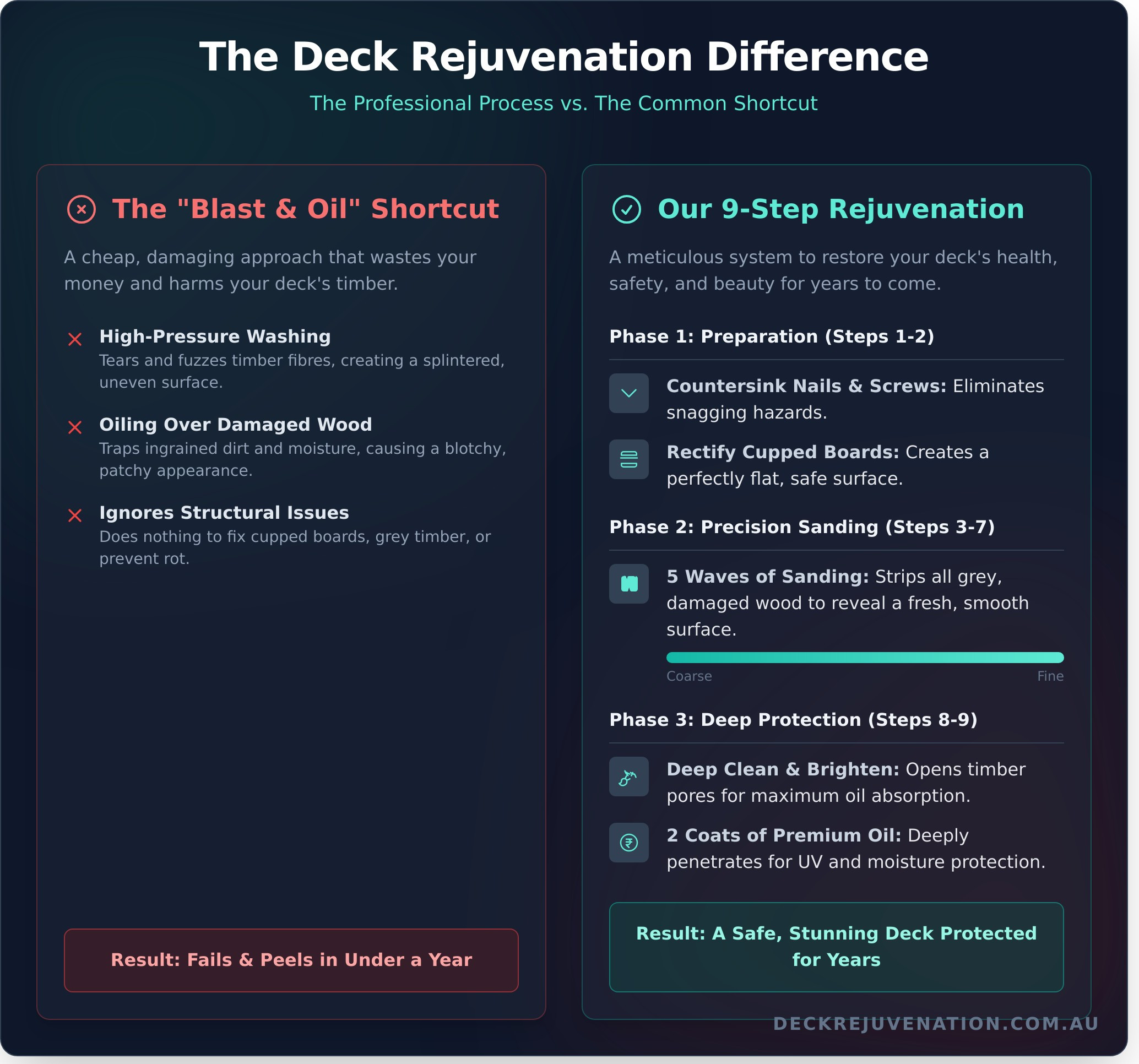
The most common shortcut in the industry is a quick “blast and oil.” A contractor hits your deck with a high-pressure washer and slaps on a cheap coating. This approach actively damages your investment. High-pressure water jets tear and fuzz the timber fibres, creating a splintered, uneven surface. Oiling directly onto this unprepared, dirty wood simply traps grime and moisture, leading to a patchy, blotchy finish that fails in under a year. This method does absolutely nothing to rectify core problems like cupping, grey timber, or rot.
The True Goal: Restoring Health, Safety, and Beauty
True deck rejuvenation aims to wind back the clock on your timber. The process involves precision sanding to mechanically strip away the entire top layer of grey, damaged wood. This exposes the fresh, healthy, and structurally sound timber underneath. Once we have a clean slate, the real work of protection begins. The final stage involves applying premium oils that penetrate deep into the fresh timber, a critical step in professional wood finishing that locks out moisture and UV rays. The result is a deck that is not only visually stunning but is also safe, level, and protected for years to come.
The Foundation of a Flawless Finish: Our 9-Step Rejuvenation Process
A beautiful, long-lasting finish doesn’t happen by accident. It’s the result of a meticulous, proven system. While other companies take shortcuts to save time, we’ve built our reputation on a comprehensive 9-step process that guarantees a superior result. Every single step is critical; skipping even one will compromise the final finish and the longevity of your deck. This is our no-shortcuts promise and the foundation of a genuine deck rejuvenation.
Steps 1-2: Preparation is Everything
The hard work starts long before the first coat of oil is applied. First, we countersink every nail and screw, setting them just below the timber surface. This prevents them from shredding our sanding equipment and, more importantly, eliminates dangerous snagging hazards for bare feet. Next, we rectify any cupped boards. This is the single most-skipped step in the industry because it requires time and effort. Sanding a warped, uneven deck simply grinds down the high points, leaving a weak, inconsistent surface. We ensure your deck is perfectly flat before we begin, creating a flawless canvas for the work ahead.
Steps 3-7: The 5 Waves of Precision Sanding
A quick pass with a floor sander is not enough. To properly restore the timber, we use a five-stage precision sanding process. We begin with a coarse grit to aggressively strip away old, peeling coatings and the top layer of grey, sun-damaged fibres. Many Australian decks are built with resilient pressure-treated wood, and our job is to reveal its durable, healthy core. Each of the following four “waves” uses a progressively finer grit to remove scratches from the previous stage, ultimately leaving the timber incredibly smooth and ready to absorb oil. We use specialised edging sanders to ensure no corner is missed.
Steps 8-9: Deep Cleaning and Premium Protection
With the sanding complete, we perform a thorough clean and brightening wash. This removes all residual dust from deep within the grain and opens the timber’s pores. This step is non-negotiable for achieving maximum oil penetration and a rich, even colour. Finally, we apply two generous coats of a premium, Australian-made, water-based decking oil. This high-quality oil dives deep into the wood to nourish and protect it from within against harsh UV rays and moisture, all while enhancing the stunning natural character of your timber. This is the final seal of quality on your deck rejuvenation.
Why Our Meticulous Sanding Process is a Game-Changer
Of all the steps in a genuine deck rejuvenation project, sanding is the most physically demanding, time-consuming, and critical to the final result. It’s also the first place competitors cut corners. A quick, superficial sand might look acceptable for a moment, but it guarantees a finish that will fail prematurely. We do the opposite. Our process is built on a foundation of precision sanding because we know it’s the only way to deliver a deck that is truly restored and protected for the long term.
Fixing ‘Cupped’ Boards: The Problem Most Won’t Touch
‘Cupping’ is when timber deck boards curl upwards at the edges, creating a concave, U-shaped profile. This is caused by a moisture imbalance-the bottom of the board is wetter than the sun-beaten top surface. A simple pass with a standard sander only scuffs the high edges, leaving the low centre untouched. When oiled, this unevenness becomes glaringly obvious. Our approach is to rectify the problem, not hide it. We use heavy-duty, professional-grade belt sanders to physically grind down the high points and create a truly flat, level surface across every single board.
The Result of 5 Sanding Waves: A Perfectly Smooth Surface
Achieving a flawless surface isn’t a one-step job. Our process involves a minimum of five progressive sanding waves, each with a specific purpose:
- Coarse Grits: We start with aggressive grits (like 40-grit) to strip old coatings, remove sun damage, and level cupped boards.
- Medium to Fine Grits: We then work our way up through finer grits to remove the scratches left by the previous stage, ultimately polishing the timber to a smooth, raw finish.
The result is a deck that is completely splinter-free and safe for bare feet. This level of smoothness is impossible to achieve with a hired floor sander, which lacks the power and precision required for this meticulous work.
Better Preparation = Deeper Oil Penetration
A perfectly sanded deck isn’t just about looks; it’s about longevity. Our multi-stage sanding process opens up the pores of the timber, creating a thirsty surface ready to absorb the protective oil. This allows the oil to soak deep into the wood fibres instead of just sitting on top as a thin film. As timber experts at the U.S. Forest Products Laboratory note, the best protection comes from a high-quality penetrating finish that works from within the wood. Deeper penetration means superior, longer-lasting protection from the harsh Australian sun and rain. The difference is not just visible; it’s structural. See the difference in our before & after gallery.
Professional Rejuvenation vs. DIY: An Honest Comparison
The temptation to tackle a DIY deck rejuvenation is understandable. On the surface, it seems like a straightforward weekend project. As a family business built on honest advice, we want to give you a realistic look at what’s involved, so you can make the right decision for your home and your budget.
While a simple clean and re-oil on a new, well-maintained deck can be a good DIY job, a full rejuvenation is a different class of work. The difference between a passable result and a professional finish comes down to three things: equipment, cost, and expertise.
The Equipment Gap: Why a Rented Sander Isn’t Enough
The heavy-duty belt sanders and precision edgers we use are professional-grade machines designed for one purpose: to level timber flooring and decking perfectly. A standard orbital sander from a hire shop simply doesn’t have the power or weight to rectify cupped or uneven boards. Using the wrong machine, or even a professional one without experience, often results in visible ‘chatter marks’ or divots in the timber-damage that is difficult and costly to fix. Furthermore, our machines are connected to powerful dust extraction systems, ensuring a clean process that protects your home from fine sawdust.
The Hidden Costs and Time of a DIY Attempt
A DIY project can quickly become more expensive than anticipated. Before you start, consider the real costs in both money and time:
- Machine Rental: A$100 – A$150 per day for a sander that isn’t up to the task.
- Materials: A$200 – A$400+ for quality sandpaper, premium oils, cleaners, brushes, and applicators.
- Time: What looks like a weekend job can easily stretch into several weekends for a novice, especially when factoring in preparation and weather.
The biggest risk is a poor result. If the finish is patchy or the timber is damaged, you may end up paying a professional to fix the mistakes on top of the original rejuvenation cost.
When to Call a Professional
We believe in transparency. If your deck just needs a light clean and a single coat of oil, we’ll tell you. But if your deck is showing signs of serious wear-such as cupping, splintering, or has old, peeling coatings that need to be completely removed-a professional is essential. If your goal is a truly flat, smooth surface and a deep-penetrating finish that will last for years, the meticulous process of a genuine deck rejuvenation is unmatched.
Unsure what your deck needs? Get a free, no-obligation assessment of your deck. We’ll give you honest advice, every time.
Don’t Settle for a Temporary Fix: Choose Genuine Rejuvenation
As you’ve seen, genuine deck rejuvenation is far more than a quick pressure wash and a coat of oil. It’s a meticulous, foundational process designed for longevity. While DIY efforts or cut-price services might look appealing upfront, they almost always ignore the critical steps-like our game-changing sanding process-that prevent peeling and premature failure. The difference is in the details, and those details are what protect your timber investment for years, not just a single season.
For over 17 years, our Melbourne-based family business has been built on honest advice and an unwavering commitment to doing the job right. We don’t take shortcuts. We specialise in rectifying the tough jobs others won’t touch, like severely cupped boards, ensuring a flawless and durable result that truly stands the test of time. Your home deserves a craftsman’s finish that lasts.
Ready for a genuine restoration? Get your free, no-shortcuts quote today.
Frequently Asked Questions About Deck Rejuvenation
What’s the difference between deck rejuvenation and deck restoration?
Many companies use “restoration” for a simple sand and coat. This is a surface-level fix that ignores deeper problems. Our deck rejuvenation is a far more meticulous process. We don’t just sand the top layer; we rectify structural issues like cupped and uneven boards, sanding the entire deck perfectly flat. This ensures our premium oils penetrate deeply for genuine, long-lasting protection, rather than just a temporary cosmetic improvement. It’s the difference between a shortcut and doing the job right.
How long does the 9-step deck rejuvenation process take?
Our meticulous 9-step process is not rushed. For an average-sized deck of around 30-40 square metres, the entire process typically takes 2 to 4 days. This allows for a full day of precision sanding and preparation, followed by the application of multiple coats with adequate drying time between each. Weather can be a factor, but we never cut corners on drying times. We do the job properly to guarantee a premium, durable finish that lasts.
How much does professional deck rejuvenation cost in Melbourne?
In Melbourne, you can expect to invest between A$60 to A$95 per square metre for a genuine, professional deck rejuvenation. The final cost depends on your deck’s condition, particularly the severity of cupping and any previous coatings that need removing. Be wary of significantly cheaper quotes; they almost always involve skipping crucial steps like sanding the deck flat. Our price reflects a no-shortcuts process that delivers a superior, longer-lasting result for your investment.
Can you rejuvenate very old or heavily weathered decks?
Absolutely. We specialise in bringing heavily weathered, grey, and neglected decks back to life. Our heavy-duty sanding process removes deep weathering and failed old coatings to reveal the fresh timber underneath. However, our first step is always an honest assessment. If the timber has extensive rot or structural damage beyond repair, we will tell you upfront. We believe in honest advice and will only take on a job if we can guarantee a brilliant, long-lasting result.
How often should I have my deck professionally rejuvenated?
Because our process is so thorough, you won’t need it done every year. A properly rejuvenated deck should only require this level of work every 3 to 5 years, depending on its exposure to sun and foot traffic. Decks that get a cheap “sand and seal” often look worn out after one season. Our focus on deep timber penetration and premium protection means your investment lasts, saving you money and hassle in the long run. A simple maintenance coat every 12-18 months is all that’s needed.
What type of timber decks can you rejuvenate (Merbau, Spotted Gum, etc.)?
With over 17 years of experience, we have worked on virtually every type of timber deck found in Melbourne. This includes popular Australian hardwoods like Merbau, Spotted Gum, Jarrah, and Blackbutt, as well as treated pine. Each timber has unique characteristics, and our process is tailored to get the best result for your specific deck. We understand how different woods absorb oil and react to sanding, ensuring a flawless finish every time, regardless of the species.
Leave a Reply