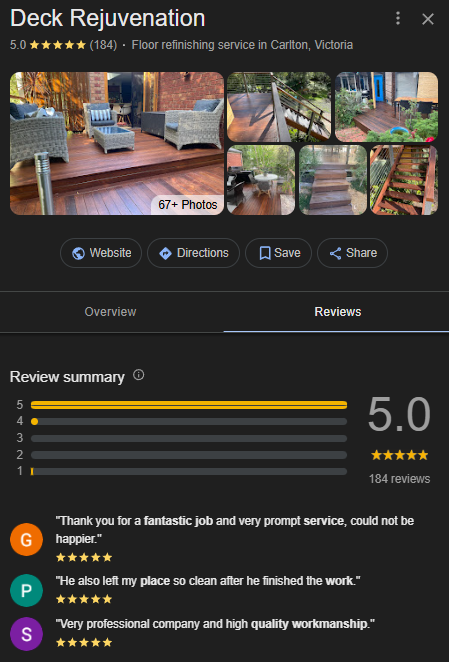
Trusted by hundreds of Melbourne households ⭐⭐⭐⭐⭐ 5.0 Google rating from 184 reviews (As at 21 January 2026)
Outdoor areas should be usable and safe—not a slip-and-trip lottery. We assist NDIS participants, support coordinators and allied health professionals with deck and external access safety works focused on risk mitigation, accessibility and functional use (not cosmetic upgrades).
Deck & External Access Safety Works for NDIS Participants (Melbourne)
Itemised quotes + before/after documentation for plan review
– Anti-slip treatments for decks, steps and ramps
– External access support works aligned to OT recommendations
Who this page is for
If you’re one of the following, you’re in the right place:
Support Coordinators needing reliable contractors for external access safety works
Occupational Therapists / Home Mod Assessors who need scopes aligned to functional outcomes
Plan Managers who want clear invoicing and clean documentation
Participants and carers dealing with outdoor safety concerns (especially wet weather)
Important note: NDIS home modifications exist to help people access and use areas of their home, especially where there are safety concerns or difficulty moving around.
What we help with (NDIS-aligned external safety scope)
We focus on outdoor access and deck safety outcomes—reducing hazards that can limit independence or increase fall risk.
Common safety works we deliver
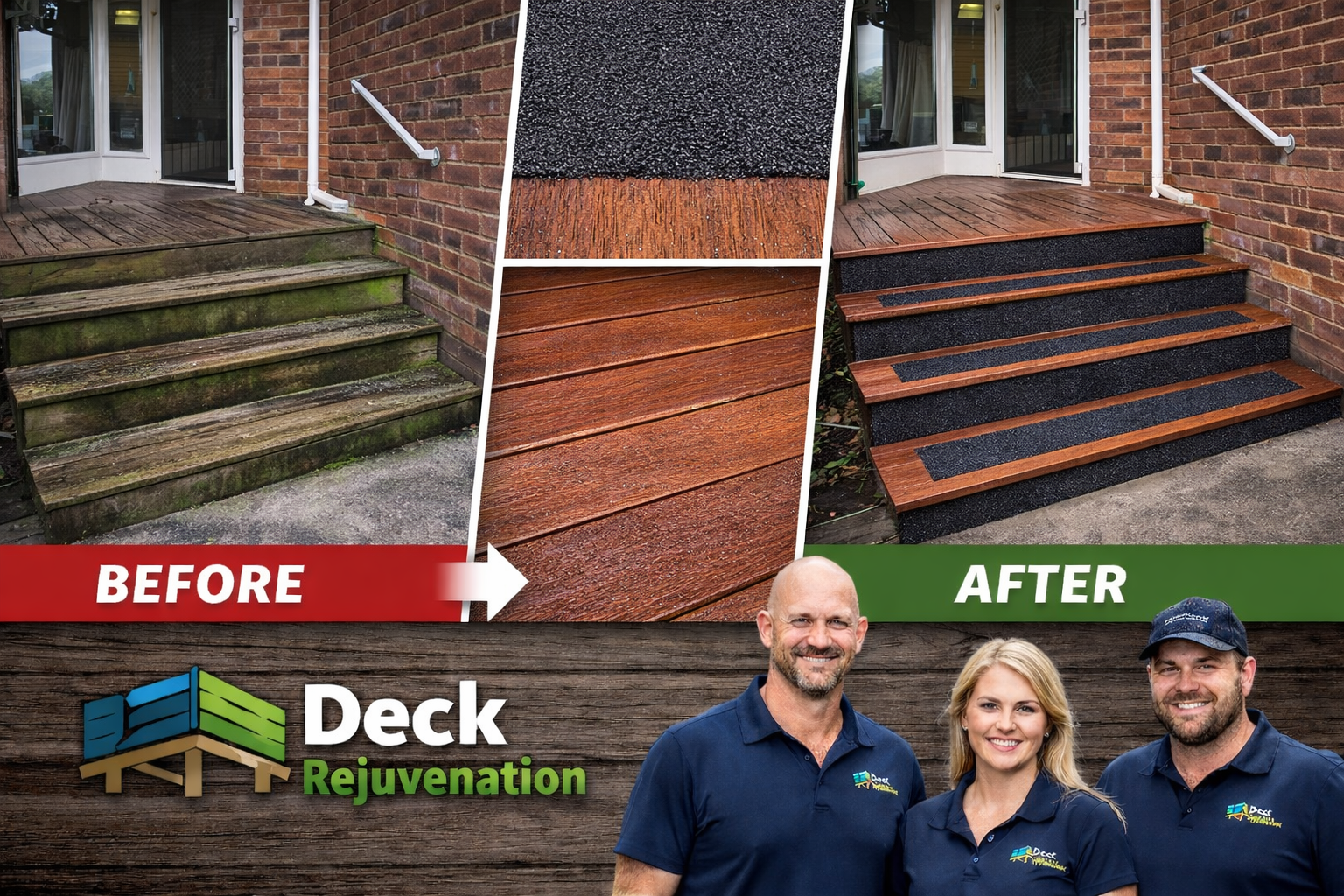
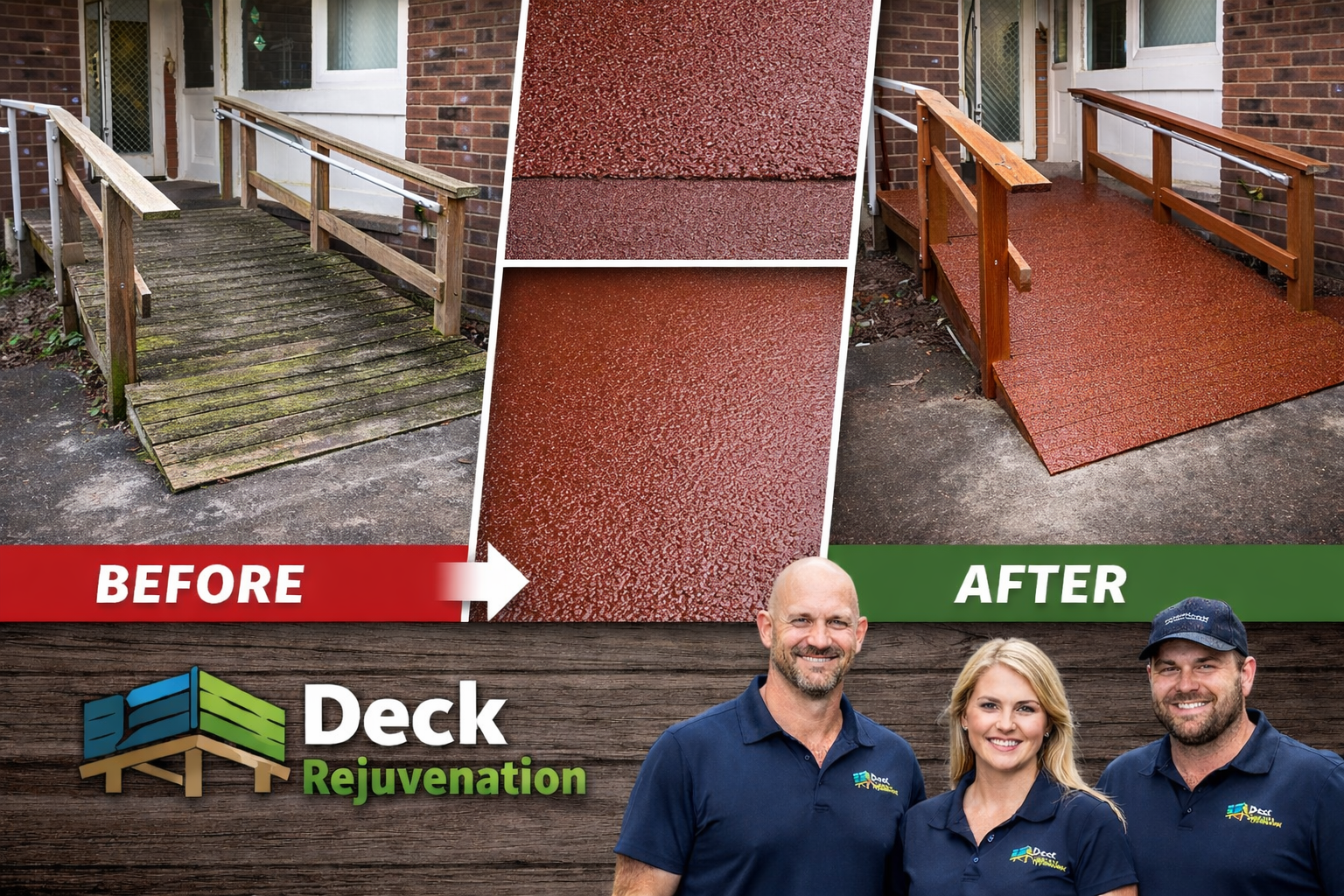
Anti-slip treatments for decks, steps, ramps and external landings
Surface levelling and smoothing transitions (where practical and appropriate)
Step and landing safety improvements (e.g., addressing inconsistent step heights where feasible)
Handrail coordination (we can quote safety works; construction/structural changes may require a carpenter—happy to coordinate with your preferred builder)
Outcomes we aim for (the language that matters)
Reduced slip and trip hazards
Safer access to outdoor living areas
Improved usability during wet weather
Reduced risk from ongoing deterioration
Documentation that supports decision-making
Support coordinators and OTs often tell us that reliability, communication, and follow-through matter just as much as technical skill. Our 5.0 Google rating from 184 reviews reflects consistent delivery across Melbourne homes. (As at 21 January 2026)
What we don’t do (and why this matters for funding)
NDIS decisions are based on reasonable and necessary evidence and functional outcomes—not aesthetics. The NDIA requires sufficient evidence to decide what home modification supports are reasonable and necessary.
Typically not suitable for NDIS funding
Cosmetic restoration purely for appearance
Staining/oiling solely to “make it look new”
Upgrades that aren’t connected to disability-related functional barriers
If your goal is primarily cosmetic, we can still help—but it’s usually a standard private job, not an NDIS-aligned scope.
How the NDIS process usually works (simple and coordinator-friendly)
We keep this straightforward and documentation-ready.
Step 1 — Safety assessment & evidence
The NDIA commonly expects evidence (often from an OT or assessor) to support home modification decisions. We can work alongside that evidence by documenting current hazards and proposing practical rectification scopes.
Step 2 — Clear scope + itemised quote
You receive a quote written in safety/outcome language:
Existing condition summary
Hazards identified (slip/trip risk)
Itemised scope of works
Photo documentation
Exclusions (cosmetic works)
Step 3 — Works completed + after documentation
We provide after photos and any relevant notes to confirm hazards were addressed.
Step 4 — Invoicing (plan-managed / self-managed)
Invoices need specific details (ABN, participant details, etc.). If plan-managed, invoices are typically sent to the plan manager.
Plan-managed vs self-managed (quick clarity)
If the participant is plan-managed
We invoice the plan manager with the required invoice fields.
If the participant is self-managed
You can engage providers more flexibly; unregistered providers can be used by plan- and self-managed participants in many cases. (We’ll still keep everything documented properly.)
Why “slip and trip risk” is taken seriously
Slips, trips and falls are a major safety hazard category, and risk should be eliminated or minimised where practicable. Outdoor decks and steps become higher risk with moisture, algae, worn coatings, raised fixings, and uneven boards—especially for people with mobility challenges.
Attention Katrina Subject NDIS Project or please call 1300 363 478 to have a chat with Katrina about the overall process
FAQ
Frequently asked questions
Can NDIS funding cover deck works?
Sometimes—when the works are tied to safety, access and functional outcomes (e.g., reducing slip/trip hazards, improving safe outdoor access). Home modifications are intended to help people access and use areas of their home, especially where safety or mobility is impacted.
Is deck restoration funded by NDIS?
Cosmetic “restoration to look new” is generally not the intent of home modification supports. Funding decisions rely on evidence and whether supports are reasonable and necessary. If the scope is hazard rectification, it is more likely to align than purely aesthetic refinishing.
Do you need to be an NDIS registered provider?
Not always. Only self-managed or plan-managed participants can generally choose unregistered providers. (If someone is NDIA-managed, registration requirements can be stricter depending on support type—coordinators usually know which pathway applies.)
What’s the difference between “home modifications” and “maintenance”?
Home modifications are custom changes to improve access and use of the home. Maintenance is ongoing work to keep surfaces safe and functional (often relevant when deterioration increases hazard risk).
What sort of evidence is needed for approval?
The NDIA needs sufficient evidence to decide whether home modification supports are reasonable and necessary. OT recommendations and clear documentation of hazards typically strengthen submissions.
Do you work with Occupational Therapists?
Yes. We can align scopes to OT recommendations and provide photos and an itemised scope to support the assessment and approval process.
What do you mean by “anti-slip treatment”?
A surface treatment intended to improve slip resistance, particularly in wet weather. We select appropriate solutions based on timber condition, existing coatings, exposure, and traffic patterns.
What hazards do you commonly see on decks?
Loose or cupped boards creating uneven footing
Raised fixings / protruding nails
Worn coatings becoming slick when wet
Algae/mould creating slippery patches
Uneven transitions between door thresholds and deck surfaces
Can you fix loose boards and raised fixings?
Yes—where the issue is rectifiable within a safety scope (resetting nails, replacing hazardous boards where required).
What if the job needs construction changes like ramps?
We don’t build new decks or major structural access builds. If construction is needed (ramps, widening access points), we can coordinate with a carpenter/builder (yours or ours) and complete the safety surface works around it.
Do you provide before/after photos?
Yes—because it’s useful for demonstrating that hazards were addressed and the surface is safer for use.
How does invoicing work for plan-managed participants?
Plan-managed participants typically require invoices sent to the plan manager. Invoices must include required details such as ABN and participant identifiers and other claim details.
How quickly can you quote?
If you send clear photos and dimensions as well as relevant details of the job we can get a NDIS quote to you within 24 hours. If its urgent please let us know.
Do you service all of Melbourne?
We service 30 KM radius of Eltham predominately but having said that we have done NDIS jobs in Sunbury, Gisborne, Yea etc.
Can you create an ongoing safety maintenance cycle?
Yes. Preventative maintenance is often the most cost-effective way to reduce the risk of outdoor surfaces becoming hazardous again, particularly in fully exposed areas.
Following the completion of the initial safety rectification works, we recommend establishing an ongoing safety maintenance cycle:
6-monthly maintenance for fully exposed decks, steps, ramps and landings
12-monthly maintenance for undercover or partially protected areas
Each maintenance visit includes:
Removal of organic build-up (mould, algae and contaminants)
Inspection and rectification of raised or popping fixings
Condition check of high-traffic and high-risk areas
Reapplication of an anti-slip rated coating where required to maintain slip resistance
This approach helps maintain safe access, reduce slip and trip risks, and prevent deterioration from escalating into higher-risk or higher-cost works over time.
What should support coordinators include when they contact you?
Recent Comments