
That grey, tired-looking deck is a common sight in Melbourne homes. You head to the hardware store, faced with an overwhelming wall of promises in plastic bottles. You’re looking for the best deck cleaner, but you’re rightfully worried. Will this one strip the timber? Is that one just expensive bleach? The fear of spending a weekend scrubbing only to damage your deck-or see the mould return in six months-is very real.
Before you buy another product, I want to give you some honest advice. As a professional who has rectified countless botched DIY jobs, I’ve seen what works and what causes costly damage. This guide cuts through the marketing noise. We’ll expose the truth about common DIY deck cleaners and explain why simply applying a chemical is never the full story. You’ll learn what it actually takes to remove mould and restore your timber’s genuine colour safely, and why proper cleaning is just the first, crucial step in a meticulous process for a finish that truly lasts.
What Is a Deck Cleaner? (And Why It’s Not a Miracle Solution)
Many homeowners believe a powerful deck cleaner is all they need to bring a weathered deck back to life. This is the first and most common mistake we see. Let’s be direct: a deck cleaner is not a restoration tool. It’s a chemical preparation product, and understanding its real job is crucial to getting a result that lasts.
At its core, a deck cleaner is a chemical solution designed to break down and lift organic surface contaminants. Its primary job is to attack things like mould, mildew, algae, and built-up surface grime. This is a practical application of basic wood preservation science, targeting the fungi and algae that thrive on your timber. However, it only works on the surface. It cannot remove damaged wood, and it won’t fix physical deterioration.
The Real Purpose of a Cleaner: Preparing the Timber Surface
Think of a cleaner as the first step in a much larger process, not the entire solution. Its true purpose is to prepare a timber surface for a new coat of oil or stain. It effectively removes the surface-level grime and biological growth that would otherwise prevent the new coating from penetrating properly. For a deck that is already in good condition, a quality cleaner is the correct preparatory step before applying a maintenance coat of oil.
Common Deck Problems a Cleaner Alone Can’t Fix
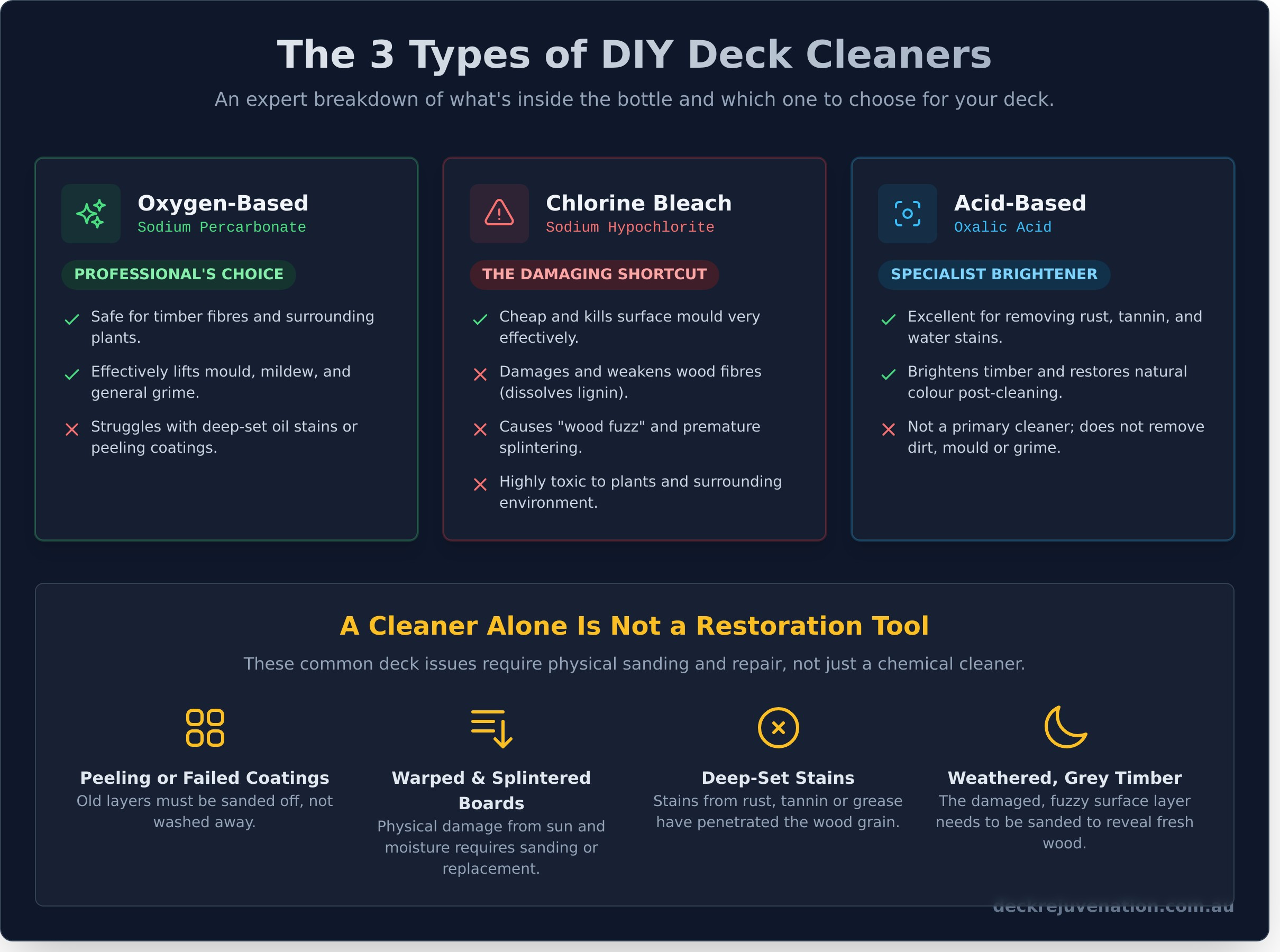
This is what most companies selling “miracle” cleaning products won’t tell you. If your deck suffers from any of the following issues, no amount of scrubbing with a cleaner will solve the root problem. These issues require physical rectification, usually through professional sanding.
- Peeling or Failed Coatings: Cleaners cannot strip old, failing layers of stain or oil. This requires sanding to take the timber back to a fresh, raw state.
- Cupped, Warped, or Splintered Boards: These are physical deformities in the timber caused by moisture and sun damage. A chemical cannot flatten or smooth the wood.
- Deep-Set Stains: Rust marks from furniture, black tannin bleeds, or deep grease spots have penetrated the wood grain. A surface cleaner won’t lift them out.
- Weathered, Grey Timber: While a cleaner can lift some oxidised fibres, it cannot remove the physically damaged, fuzzy, and rough surface of a badly weathered deck. Only sanding creates a truly smooth, new surface for oil to absorb into.
In short, a cleaner cleans. It doesn’t restore, repair, or resurface. For genuine deck restoration, cleaning is just the beginning of the job, not the end.
The 3 Types of Deck Cleaners You’ll Find on the Shelf
Walk into any hardware store and you’re faced with a wall of options. It’s confusing. But here’s the honest truth from a professional: the brand on the bottle matters less than the active ingredient inside. This is your insider’s guide to what you’re actually buying. The active chemical dictates how the product works, what it’s good for, and the risks involved. Understanding this is fundamental to the science of wood preservation and getting a result that lasts.
A non-negotiable safety rule: Before you open any container, put on your gloves and eye protection. These are powerful chemicals, and there are no shortcuts to safety. Be mindful of overspray, as it can stain or damage nearby plants, glass, or metal fittings.
Type 1: Oxygen-Based Cleaners (Sodium Percarbonate)
This is the workhorse we recommend for most jobs. When mixed with water, sodium percarbonate releases oxygen, creating bubbles that gently lift dirt, algae, and weathered timber fibres from the surface. It’s a powerful but controlled clean.
- Pros: Generally safer for timber fibres and surrounding plants than harsher chemicals. It is very effective on mould, mildew, and general grime without stripping the wood’s natural colour.
- Cons: It can struggle with stubborn, deep-set oil stains or trying to remove a failed, peeling deck coating. For that, you need a dedicated stripper, not a cleaner.
Type 2: Chlorine Bleach Cleaners (Sodium Hypochlorite)
This is the sledgehammer of deck cleaning. While it’s cheap and nukes mould on contact, we rarely recommend it. Why? Because chlorine bleach is brutal on timber. It aggressively kills everything, but it also dissolves lignin-the natural glue that holds wood fibres together. This causes permanent damage and that fuzzy, splintered look on older decks.
- Pros: Inexpensive and kills surface mould and mildew with extreme efficiency.
- Cons: Damages and weakens wood fibres, causes “wood fuzz,” and is highly toxic to plants. A shortcut that can shorten the life of your deck.
Type 3: Acid-Based Cleaners & Brighteners (Oxalic Acid)
This isn’t your primary deck cleaner; it’s the specialist you call in for a specific job. Oxalic acid is brilliant for reversing chemical stains and restoring natural colour. It’s most often used as a second step after cleaning to neutralise the timber and brighten it before oiling, especially on Australian hardwoods like Merbau that are prone to tannin bleed.
- Pros: Excellent for removing dark tannin stains, water marks, and rust spots from nail heads or outdoor furniture.
- Cons: It is not designed for removing dirt, mould, or grime. It is a brightener, not a cleaner.
The Professional Process: Why Cleaning is Just Step 6 of 9
Most homeowners believe deck restoration is all about a powerful cleaner and a bit of elbow grease. This is the biggest mistake we see. The ‘spray and scrub’ approach only removes surface-level dirt, leaving the damaged, grey timber underneath untouched. It’s a temporary fix for a deep-seated problem.
For a genuine, long-lasting restoration, preparation isn’t just part of the job-it’s 90% of the job. A professional process is meticulous, and using a deck cleaner is just one step in a much larger system designed for deep timber protection.
The Critical First Steps: Repair and Sanding
Before we even think about cleaning, we assess the fundamentals. Are there loose boards? Protruding nails? Any signs of rot? There is no point applying a premium finish to a deck that isn’t structurally sound. Once rectified, the real work begins with precision sanding. This isn’t a light scuff; it’s about mechanically removing the entire failed coating and the sun-damaged top layer of timber, revealing fresh, raw wood underneath. Sanding, not cleaning, is what creates a truly flawless foundation.
The Two-Step Clean & Brighten Method
With the timber stripped back, we move to Step 6: cleaning. At this stage, a professional deck cleaner isn’t used to strip old coatings-the sander already did that. Its job is to wash away the fine sanding dust and any remaining contaminants. While there are many types of deck cleaners, we use a specific formula designed for post-sanding preparation. This is immediately followed by a wood brightener (typically Oxalic Acid based) which neutralises the cleaner and critically, opens up the grain of the timber, making it porous and ready to drink in oil.
The Final Step: Oiling for Deep, Lasting Protection
This is where our meticulous preparation pays off. A clean, brightened deck with an open grain acts like a sponge. The oil doesn’t just sit on the surface; it penetrates deep into the timber fibres, protecting it from the inside out. This is the fundamental difference between a DIY job that looks good for six months and a professional restoration that stays protected for years. It’s not about the oil you use, but how well the timber is prepared to accept it.
This meticulous process is why our results stand the test of time. See our full 9-step restoration process here.
DIY Deck Cleaner vs. Professional Service: An Honest Assessment
We’re a professional restoration company, but we built our business on honest advice. We will always tell you if a full-service restoration isn’t necessary for your deck. A store-bought deck cleaner can be a useful tool for minor upkeep, but it’s crucial to understand its limitations. Using it in the wrong situation can mask deeper problems or even cause damage.
Here’s a straightforward guide to help you decide.
When a DIY Cleaner Might Be Good Enough
A DIY approach is for maintenance, not restoration. A simple clean is likely all you need if your deck meets these criteria:
- It is less than two years old and only has light, surface-level mould or grime.
- You are performing annual upkeep between professional services to keep a well-maintained deck looking its best.
- The existing oil or stain is in perfect condition, with no peeling, patchiness, or fading.
Red Flags: When You Absolutely Need a Professional
If you see any of the following, put the DIY products down. These are not cosmetic issues; they are clear signs of timber degradation that a surface wash cannot fix and may even worsen.
- Grey, splintering, or rough timber: This indicates the surface fibres of the wood are dead and need to be mechanically removed through sanding, not just washed.
- Peeling or flaky old coatings: Applying a cleaner over a failing finish is a waste of time and money. The old coating must be completely stripped back for any new product to work.
- ‘Cupped’ boards: When board edges curl upwards, it’s a sign of moisture imbalance and structural stress. This requires specialist sanding to rectify and level the surface.
- Fuzzy or damaged wood: Often caused by incorrect pressure washing, this “furring” of the grain is permanent damage that needs professional sanding to smooth out.
This principle of knowing when to call in experts applies to many areas of home maintenance. While this guide focuses on the specific challenges of timber decks, the same logic applies to other significant cleaning tasks around the home. For those interested in seeing what a full-service professional company offers for both residential and commercial properties, you can learn more about AlphaLux Cleaning.
Cost vs. Value: The Long-Term Price of a Shortcut
A DIY cleaner is a temporary fix that addresses surface dirt. It doesn’t restore the timber’s health or provide lasting protection, meaning you’ll likely be repeating the job every 6-12 months. More importantly, incorrect use of harsh chemicals or pressure washers can permanently damage your deck, leading to expensive repairs.
A professional service is an investment in longevity. It’s not just a clean; it’s a meticulous process of stripping, sanding, and rectifying damage to prepare the timber correctly. This allows premium, penetrating oils to protect the wood from within, not just sit on the surface. The result is a durable, beautiful finish that lasts for years, not months, genuinely protecting your asset. If your deck shows any of the red flags above, see how a professional restoration delivers true, long-term value.
Your Next Step to a Genuinely Restored Deck
As we’ve covered, a lasting, beautiful finish comes from a professional process, not just a product off the shelf. Choosing the right deck cleaner is only a small part of the equation; the real secret to a deck that looks incredible for years is the meticulous preparation that comes before any coating is applied. This is why our process focuses so heavily on specialist sanding-it’s the only way to achieve a genuinely restored finish that lasts.
As a family business with over 17 years of hands-on experience, we believe in honest work and no shortcuts. Our meticulous 9-step process was designed to rectify common issues and deliver a superior result that protects your investment. Instead of guessing which product to use or what your timber needs, let an expert give you a straight answer.
Get a free, honest assessment of your deck’s condition. We’ll help you understand the best path forward to bring your deck back to life.
Frequently Asked Questions About Deck Cleaners
Can I just use a pressure washer to clean my deck?
No. A pressure washer is a tool, not a cleaning solution. Using high pressure alone will gouge the soft grain of your timber, causing irreversible damage and forcing water deep into the boards. This leads to cupping and premature rot. A pressure washer should only be used on a low setting to rinse away a chemical cleaner that has already done the heavy lifting. The chemical lifts the dirt; the water just washes it away.
This is why for significant exterior cleaning jobs, it’s often best to hire a professional service. Specialists like Poseidon Power Washing LLC have the right equipment and experience to clean surfaces powerfully without causing damage.
Is it safe to mix different deck cleaning chemicals?
Absolutely not. Mixing chemicals is dangerous and will give you a poor result. You risk creating toxic fumes or a chemical reaction that can permanently damage your timber. Professional products are formulated for a specific purpose. Some are alkaline, some are acidic, and mixing them can neutralise their effect or worse. Always use a single, high-quality product and follow the manufacturer’s instructions to the letter. Don’t take shortcuts with safety.
How often should I be cleaning my timber deck in Melbourne?
In Melbourne’s variable climate, a professional clean and re-coat is essential every 12 months. The damp winters encourage mould and algae, while the harsh summer sun degrades the protective oil. An annual deep clean removes this damaging build-up and prepares the timber for a fresh coat of oil, which is crucial for protecting it from the elements. This regular maintenance is the key to preventing costly repairs and ensuring your deck lasts for decades.
Can I use vinegar or other homemade solutions to clean my deck?
We strongly advise against it. While vinegar might seem like a cheap, natural option, it’s an acid that can damage the lignin in the timber fibres, making the wood look “furry” and brittle over time. It’s also ineffective against embedded mould and will not prep the surface correctly for a new coat of oil. Using a purpose-formulated deck cleaner is the only way to get a genuine, long-lasting result and properly protect your investment.
Does deck cleaner remove old oil or stain?
A standard deck cleaner is formulated to remove organic growth like mould, algae, and general grime, as well as grey, weathered timber fibres. It is not powerful enough to remove an existing coat of deck oil or stain that is still intact. For that job, you need a dedicated deck stripper, which is a much more aggressive product designed specifically to dissolve and lift old coatings from the timber before sanding.
What’s the difference between a deck cleaner and a deck stripper?
Think of it like this: a cleaner is for maintenance, while a stripper is for restoration. A deck cleaner is used to wash a dirty or weathered deck before applying a fresh coat of oil. A deck stripper is a powerful chemical used to completely remove old, failed coatings that are peeling, patchy, or the wrong colour. Stripping is the first step in a full restoration project to get the timber back to a raw, clean slate.
Leave a Reply