
Is your once-beautiful timber deck now a grey, slippery hazard? It’s a common sight across Melbourne homes: mould takes hold, the vibrant colour fades, and you’re rightfully worried that a pressure washer might do more harm than good. The quick DIY fixes you’ve tried just don’t seem to last, leaving you back at square one a few months later, frustrated with the lack of results.
The truth is, a genuine deck cleaning is about more than just blasting away dirt. It is a meticulous process designed to safely revive the timber, remove stubborn contaminants, and perfectly prepare the surface for long-lasting protection. It’s the difference between a temporary rinse and a professional restoration that protects your investment and makes your deck safe for your family again.
In this guide, we’ll cut through the noise and show you the correct methods the professionals use. You will learn how to avoid costly mistakes, choose the right products, and achieve a stunning, non-slip result that endures. Let’s restore the natural beauty of your deck the right way.
Why Regular Deck Cleaning is Non-Negotiable for Melbourne Decks
Before you even think about applying a single drop of oil, we need to talk about the most critical step in protecting your timber: a professional clean. In Melbourne’s notoriously damp climate, a deck is a perfect breeding ground for mould, algae, and mildew. These aren’t just ugly green and black stains; they create a dangerously slippery surface and actively destroy your timber from the inside out.
Many homeowners mistakenly believe that oiling a deck is enough. The truth is, applying expensive oil over a layer of ingrained dirt and biological growth is a complete waste of time and money. The grime acts as a barrier, preventing the oil from penetrating the timber pores. The result? A coating that sits on the surface, ready to peel and flake within months, leaving your deck unprotected.
Furthermore, dirt and organic debris trap moisture against the timber boards. This constant dampness is the primary cause of premature rot and decay, a fundamental problem addressed by proper wood preservation techniques. Effective deck cleaning isn’t just about appearances; it’s a non-negotiable first step to ensure the health, safety, and longevity of your investment.
Telltale Signs Your Deck Needs Urgent Cleaning
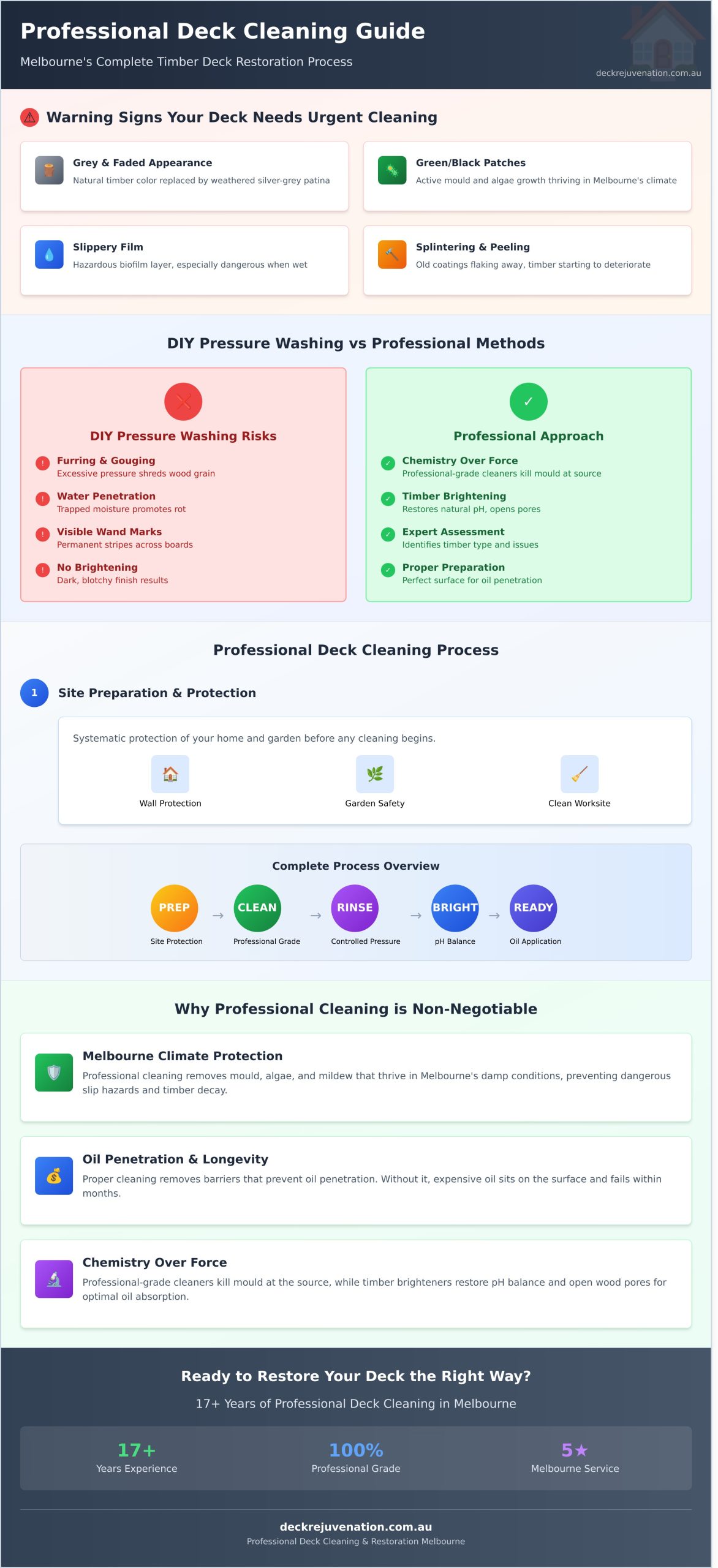
Don’t wait for major damage to appear. Your deck will give you clear warnings that it needs immediate attention. Look for these common red flags:
- A Grey and Faded Appearance: The rich, natural colour of the timber has been replaced by a weathered, silver-grey patina.
- Visible Green or Black Patches: This is a sure sign of active mould and algae growth, which thrives in Melbourne’s weather.
- A Slippery or Slimy Film: If your deck feels treacherous underfoot, especially when wet, it’s covered in a hazardous layer of biofilm.
- Splintering and Peeling: Old, failed coatings are flaking away, and the dry, unprotected timber is starting to splinter.
The Hidden Cost of Neglect: Beyond Aesthetics
Ignoring these signs leads to problems that go far deeper than surface-level ugliness. Unchecked mould growth can permanently stain and damage the timber fibres, making a full restoration much more difficult. Meanwhile, the grit and dirt ground into the deck by foot traffic act like sandpaper, slowly eroding the surface of the boards. This gradual destruction inevitably leads to costly repairs, such as replacing entire sections of rotted timber-an expense that proper, regular deck cleaning and maintenance could have easily prevented.
The Pressure Washer Trap: DIY Cleaning vs. Professional Methods
It’s a tempting thought for many Melbourne homeowners: hire a high-powered pressure washer for the weekend and blast away years of grime. But this approach is a trap, and it’s the single biggest reason a new deck oiling job fails within months. The goal isn’t just to make the timber look clean; it’s to prepare it properly so the oil can genuinely penetrate and protect. Brute force with a pressure washer often does more harm than good, leading to costly, irreversible damage.
Common Mistakes with High-Pressure Washing
Using a pressure washer without proper training is like giving a sledgehammer to a watchmaker. The risks are significant. In our 17+ years of experience, we’ve seen countless decks damaged by well-intentioned DIY efforts. These are some of the most common power washer mistakes we’re called in to rectify:
- Furring and Gouging: Excessive pressure shreds the soft wood grain, leaving a fuzzy, splintered surface that looks terrible and absorbs oil unevenly.
- Forcing Water In: High PSI drives water deep into the timber’s core. This moisture gets trapped under the new coat of oil, promoting rot and mould growth from the inside out.
- Visible Wand Marks: Using the wrong nozzle or an inconsistent technique leaves ugly, permanent stripes and lines across the boards.
- Skipping the Brightener: A crucial step DIYers miss. Without it, the wood’s pH is left unbalanced, resulting in a dark, blotchy finish.
Why Professional-Grade Cleaners are Different
A professional deck cleaning service relies on chemistry, not just pressure. The generic “deck wash” from a hardware store often contains harsh bleaches that only hide mould, leaving the spores behind to regrow. Our process is different. We use specific, professional-grade formulas that kill mould and algae at the source. This is followed by a timber brightener, which serves two critical functions: it neutralises the cleaning agent and restores the wood’s natural pH, opening up the pores to accept the new oil. This meticulous preparation is the secret to a longer-lasting finish.
The Value of an Expert Assessment
Before any cleaning begins, a professional knows what to look for. We identify your timber type-whether it’s hardy Merbau or a softer pine-to determine the right pressure and cleaning solution. We also inspect for underlying issues like wood rot, loose boards, or cupping that a pressure washer could worsen. Starting a job without this knowledge is a shortcut to failure. It avoids wasting your money on oiling a deck that needs more significant repairs first. Get an honest, upfront assessment of your deck.
The Professional Deck Cleaning Process: A Step-by-Step Breakdown
A lasting finish isn’t achieved with a quick blast from a pressure washer. Genuine, long-term timber protection is built on a foundation of meticulous preparation. What separates a professional job from a weekend shortcut is a methodical process designed to clean, restore, and prepare the timber surface to perfectly accept a new coat of oil. This is the non-negotiable standard for any quality deck cleaning service.
We don’t just spray and hope for the best. We follow a proven, multi-stage process that guarantees a superior and consistent result every time. Here’s how it’s done right.
Step 1: Meticulous Site Preparation & Protection
Before any cleaning begins, we systematically protect your home and garden. This crucial first step prevents any damage to surrounding surfaces and ensures a clean, safe worksite. Our preparation includes:
- Protecting walls, glass doors, and delicate garden beds with durable coverings.
- Removing all furniture, pots, and loose debris from the deck surface.
- A thorough sweep to clear away dirt, leaves, and cobwebs.
- Checking for any raised nail or screw heads and countersinking them below the surface to prevent damage during the process.
Step 2: Application of Specialised Cleaning Agents
We apply a professional-grade, pH-balanced timber cleaner designed to break down embedded dirt, UV-damaged fibres, mould, and old, failed coatings. We let the product do the heavy lifting by allowing it the correct ‘dwell time’ on the timber. This powerful agent works deep into the grain, lifting contaminants to the surface. For stubborn, high-traffic areas, we use stiff-bristled brooms to gently agitate the grime, ensuring a uniform clean without damaging the timber.
Step 3: Controlled Rinsing and Timber Brightening
This is where many operators cause irreversible damage. We never use high-pressure blasting, which can fur and splinter your timber. Instead, we use a controlled, low-to-medium pressure rinse to wash away the cleaning agent and all the loosened grime. Afterwards, we apply a timber brightener. This critical step neutralises the cleaner, removes tannin stains, and opens up the wood’s pores, creating the ideal surface for maximum oil penetration and adhesion.
This disciplined approach to deck cleaning is the only way to ensure your newly oiled deck doesn’t just look good for a few months, but remains protected for years to come. It’s the standard of care we bring to every Melbourne deck we restore. To see the difference for yourself, get in touch for an honest assessment.
Beyond Cleaning: Preparing Your Deck for Long-Term Protection
A common mistake Melbourne homeowners make is seeing a deck cleaning service as the final job. It’s not. A meticulous clean is the essential first step-the non-negotiable foundation upon which all lasting protection is built. Think of it as preparing the canvas. Without a truly clean surface, any oil or coating you apply is destined to fail prematurely. The goal isn’t just a clean deck; it’s a deck that’s ready to be properly protected from the elements.
Why a Clean Deck Absorbs Oil Better
You wouldn’t paint a dirty, dusty wall and expect a good finish. Your deck is no different. A professional clean does more than just remove leaves and surface grime; it strips away built-up contaminants and opens up the timber’s pores. This allows the deck oil to achieve deep, genuine penetration into the wood grain. When oil sits on a layer of dirt, it forms a weak film that quickly peels and flakes away, leaving your timber exposed and wasting your investment.
The Critical Link Between Cleaning and Sanding
While a thorough clean removes surface dirt, it cannot remove a failed, peeling coating or rectify sun-damaged, grey timber. This is where most shortcuts are taken. For a flawless, long-lasting finish, cleaning must be followed by precision sanding. Sanding strips the timber back to a fresh, raw state, removes old coatings, and creates the perfect uniform surface for oil application. This is the difference between a quick touch-up and a genuine deck restoration that lasts.
From Clean to Rejuvenated: The Next Steps
Properly preparing your deck is a multi-stage process that demands expertise. It moves from cleaning to sanding, and finally to the application of a premium-grade oil that nourishes and protects the timber from Melbourne’s harsh weather. Skipping a step or using the wrong equipment will compromise the entire result. A professional service ensures this meticulous process is done right, delivering protection that lasts. See our full 9-step deck rejuvenation process to understand what genuine protection involves.
Invest in Your Deck: The Right Way to Restore and Protect
As we’ve covered, your Melbourne deck faces a constant battle with the elements. We’ve shown why a high-pressure wash often does more harm than good and how a professional process is about much more than a superficial clean-it’s about preparing your timber for genuine, long-lasting protection.
Don’t settle for a quick fix that looks good for a few months. As a family business with over 17 years of experience, we provide honest advice and take no shortcuts. Our professional deck cleaning is the critical first step in a meticulous process designed to guarantee a superior finish. We do the hard work required to ensure your deck is not just clean, but properly restored and protected for years to come.
Ready to see the difference a genuine craftsman can make? Get a no-obligation quote for your deck cleaning and restoration.
Give your deck the expert care it deserves and enjoy your beautiful outdoor space with confidence.
Frequently Asked Questions About Deck Maintenance
How often should I have my deck professionally cleaned?
For most decks in Melbourne, a professional clean and re-oil is necessary every 12 to 18 months to protect the timber from the harsh weather. An annual clean prevents the build-up of mould and grime that can degrade the surface. Waiting until the timber is grey and cracked means you are rectifying damage, not preventing it. Proactive maintenance is always more cost-effective and delivers a far superior, longer-lasting result.
Can you clean a composite deck the same way as a timber deck?
No, the process is completely different and using the wrong method will cause damage. Timber decks require specific cleaners and brighteners to prepare the grain for oil penetration. Composite decking needs specialised, non-abrasive solutions that remove contaminants without harming the synthetic surface or causing discolouration. We use distinct, manufacturer-approved processes for each material to guarantee a safe and effective clean without taking shortcuts.
Is it safe to use bleach to clean my wooden deck?
Absolutely not. Using bleach (sodium hypochlorite) is a destructive shortcut that we never take. It aggressively breaks down the lignin in the wood-the natural glue holding the fibres together. This leaves the timber fuzzy, brittle, and unable to properly absorb a new coat of oil. We use professional-grade, pH-balanced wood cleaners and oxalic acid brighteners to kill mould and restore the timber’s colour without causing permanent damage.
How much does professional deck cleaning in Melbourne typically cost?
The cost for a comprehensive professional deck cleaning and oiling service in Melbourne generally ranges from $35 to $55 per square metre. The final price depends on your deck’s size, current condition, and timber type. Be cautious of quotes that seem too low, as they often signal that critical steps like sanding or using premium, penetrating oils are being skipped. Our quotes are transparent and cover the entire meticulous process.
How long does the professional deck cleaning process take?
For an average-sized deck, the complete restoration process takes 2-3 days, weather permitting. Day one is dedicated to meticulous preparation: stripping old coatings, cleaning, and sanding the deck perfectly flat. The timber must then dry completely. Day two is for the careful application of the first one or two coats of oil. A final coat is often applied on day three to ensure deep penetration and maximum protection. Rushing this is a recipe for failure.
Will cleaning my deck remove the old oil or stain?
A simple pressure wash alone will not properly remove a failed coating. To do the job correctly, we first apply a professional-grade stripping agent to break down the old oil or stain. Only then do we use a power washer to remove it. For a truly premium finish, we follow this with a full deck sanding. This removes all residue and opens the wood’s pores, which is essential for achieving the deep, lasting penetration of the new oil.
Leave a Reply