That tired, grey timber or peeling finish on your deck is an eyesore. It’s tempting to think a quick coat of paint is the answer, but the reality of deck painting in Australia is far more complex. We see it all the time: homeowners who spend a weekend and hundreds of dollars on a finish that bubbles, cracks, and peels within a single Melbourne season. This isn’t just frustrating; it creates a much bigger, more expensive problem to fix down the line. Choosing the wrong finish is one of the most common and costly mistakes you can make.
Before you make a choice you’ll regret, it’s time for some honest advice. This guide isn’t a sales pitch; it’s a professional’s breakdown of the facts. We’ll show you the genuine pros and cons of painting your deck versus using superior penetrating oils and stains. You’ll understand the meticulous preparation required for any finish to last and learn why shortcuts always lead to failure. Our goal is simple: to give you the knowledge to choose the right path for a durable, beautiful deck that stands up to the weather and adds real value to your home.
Painting a Deck: Why It Seems Like a Good Idea
When your timber deck starts looking grey, weathered, and tired, the idea of painting it can be incredibly tempting. On the surface, the logic is sound. You want a fast, dramatic change, and a solid coat of paint promises exactly that. Homeowners are often drawn to the idea of an opaque finish that can perfectly match their home’s exterior trim, gutters, or window frames, creating a seamless, modern look.
The appeal of deck painting is rooted in its power to conceal. It offers the promise of a thick, protective shell that covers all sins: stains, watermarks, and uneven, sun-beaten timber. This creates the perception that paint is a simple, durable barrier against the harsh Australian climate, a modern take on established wood preservation methods. But does this perception match the reality of how timber behaves outdoors? Before you buy the roller and trays, it’s critical to understand what you’re truly signing up for.
The Promise of a Total Transformation
Paint’s biggest selling point is its ability to deliver a complete visual overhaul. Unlike oils or stains that enhance the timber grain, paint covers it entirely. This allows for a bold colour choice that can redefine your outdoor space. For a deck suffering from years of neglect, a fresh coat of paint provides instant gratification, quickly hiding blemishes and creating a uniform, clean surface that looks brand new from a distance.
Covering Old, Stubborn Finishes
Many see deck painting as the ultimate shortcut. If you have an old coating that is peeling, flaking, or worn, the thought of simply painting over it instead of undertaking a full strip and sand is highly appealing. The idea is to entomb the old, failed finish under a new, thick layer. However, this approach is a recipe for disaster. Paint applied over an unstable surface will fail, and fast. This shortcut almost always leads to cracking, peeling, and a far more costly problem to rectify later on.
The Honest Truth: The Dangers of Painting Timber Decks
Many painters and hardware stores will happily sell you a quick-fix solution for your timber deck. What they often fail to mention is the long-term damage that paint can cause. We believe in honest advice, and the truth is, painting your timber deck is one of the most common and costly mistakes a homeowner can make. It goes against the very nature of the material.
Timber is a natural, organic material. It needs to breathe. It expands, contracts, and releases moisture according to the weather. Sealing it under a non-breathable film of paint is like wrapping it in plastic, creating a perfect environment for disaster.
Moisture Trapping: The Silent Deck Killer
Paint creates an impermeable film over the surface of your timber. While this might look good for a few months, it traps moisture underneath. Water seeps in through tiny cracks, nail holes, or from the humid air, and then has no way to escape. This constant dampness against the wood is the primary cause of rot and decay, compromising the structural integrity of your deck from the inside out.
Peeling, Flaking, and Cracking
Your timber deck is in a constant state of movement, swelling in the humid summers and shrinking in the dry heat. An inflexible paint film cannot expand and contract with the timber. This constant stress causes the paint to crack, bubble, and peel away, leaving your deck looking patchy and neglected. This isn’t a possibility; with Melbourne’s volatile weather, it’s an inevitability.
The Nightmare of Removal
Here’s the part no one talks about. You can’t simply paint over a failing deck. The old, flaking paint must be completely removed, and this is where the real cost of deck painting becomes clear. The removal process requires aggressive, deep sanding or harsh chemical stripping. It’s a labour-intensive, messy, and expensive job that can easily cost thousands of dollars—often far more than the initial paint job itself.
Deck Paint vs. Stain vs. Oil: A Professional Comparison
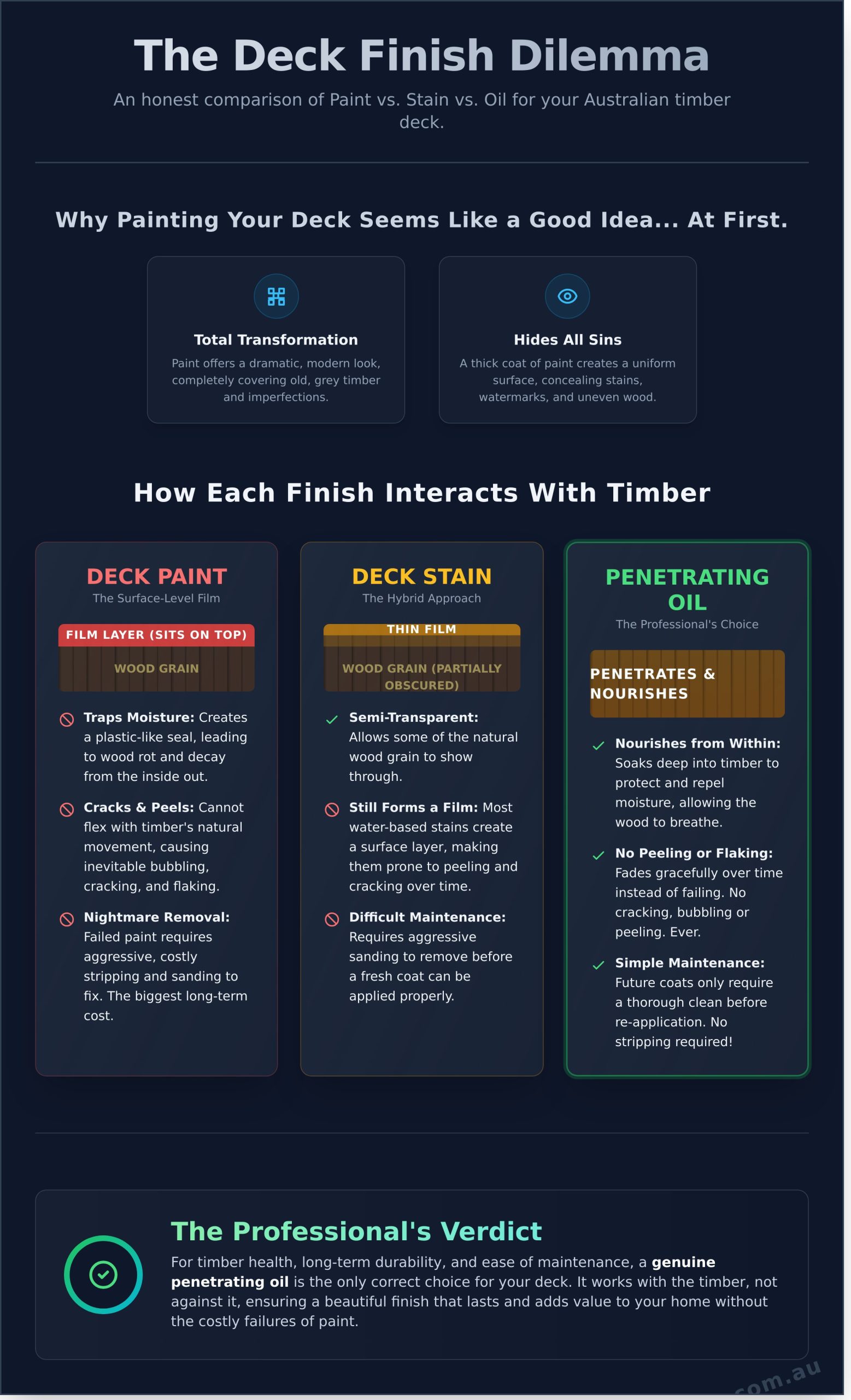
When choosing a finish for your timber deck, you’re faced with three main options: paint, stain, or oil. Many homeowners get this wrong, leading to costly and frustrating problems down the line. To make the right choice, you need to understand how each product interacts with the timber. Here’s a simple analogy: paint sits on top like a plastic jacket, stain soaks in slightly, and a quality oil penetrates deep into the wood’s fibres.
Understanding this fundamental difference is the key to a long-lasting, beautiful deck.
Deck Paint: The Surface-Level Film
Deck paint forms a thick, opaque film that sits entirely on the surface of the timber, completely hiding the natural grain. While the process of deck painting offers an endless choice of colours and is effective at hiding imperfections on an old, worn-out deck, it comes with serious drawbacks for healthy timber. This film traps moisture, which can accelerate rot from within. Over time, exposure to sun and foot traffic causes the paint to crack, peel, and flake, creating a maintenance nightmare that requires complete stripping to fix. While there are many guides on how to paint a deck, they often don’t highlight the long-term failure rate we see every day.
Deck Stain: The Hybrid Approach
Deck stains are a middle-ground option. They contain pigment like paint but are more transparent, allowing some of the wood grain to show through. A stain penetrates the surface fibres of the timber to a shallow degree, but most water-based “stains” available in Australia still form a surface film. Because they create a film, they are also prone to the same issues as paint: peeling, cracking, and flaking over time, which eventually requires aggressive sanding to remove before recoating.
Decking Oil: The Penetrating Solution
A genuine penetrating decking oil is the professional’s choice for protecting and beautifying timber. Instead of forming a film, oil soaks deep into the wood, nourishing and protecting it from within by repelling moisture. This process enhances the natural colour and grain of the timber, celebrating its character rather than hiding it. Critically, oil doesn’t peel or flake. It fades gracefully over time. Maintenance is straightforward: a thorough clean and a simple re-application of a maintenance coat restores its look and protection, no stripping required.
For timber health, appearance, and ease of maintenance, a penetrating oil is the superior choice. It works with the timber, not against it.
Confused about the best finish for your specific deck? Get honest advice from our experts.
The Superior Alternative: Professional Deck Restoration
While many homeowners consider deck painting as a quick fix, the real secret to a beautiful, long-lasting timber deck isn’t about covering it up. It’s about a complete rejuvenation process that restores the timber from the ground up. A general painter might offer a fast coat of paint, but a specialist focuses on meticulous preparation—the only path to a finish that endures.
This distinction is important across the industry; for example, the materials and techniques required when you explore Commercial Painting are entirely different from residential deck work.
This thorough method rectifies the core issues that plague weathered decks, such as dangerous splinters and “cupping,” where boards warp and hold water. We don’t just hide these problems; we eliminate them.
Preparation is Everything: Beyond a Simple Clean
A quick pressure wash is never enough. It’s a start, but it doesn’t address the real issues. Before any sanding can begin, every single nail and screw must be countersunk below the timber’s surface. This critical step, often skipped by others, is non-negotiable. It protects our precision sanding equipment from catastrophic damage and ensures a perfectly level finish is even possible.
The Power of Professional Sanding
This is where the transformation happens. Our aggressive, 5-wave sanding process does more than just smooth the surface; it strips away everything that compromises your deck’s health. We remove old, peeling coatings, sun-damaged grey fibres, stains, and imperfections. This flattens cupped boards and creates a pristine, raw timber surface, ready to absorb a protective finish. Maximum penetration is impossible without it.
Applying a Penetrating Oil Finish
Instead of a film that sits on top, we apply two coats of a premium, water-based decking oil. This finish penetrates deep into the timber grain, nourishing and protecting it from within. The result is a stunning, genuine timber finish that highlights the wood’s natural beauty. Most importantly, it will never peel, crack, or flake like a typical deck painting job. It’s a durable solution designed for the harsh Australian climate.
Don’t settle for a temporary cover-up. Invest in a process that respects your timber. See the difference a professional restoration can make at deckrejuvenation.com.au.
Beyond Deck Painting: A Lasting Solution for Your Timber
As we’ve explored, a coat of paint is often a short-term fix that leads to long-term headaches—peeling, chipping, and trapped moisture that can rot your timber. The superior alternative is to work with the wood, not against it. A professional restoration using premium penetrating oils nourishes the timber, allowing it to breathe and ensuring protection that genuinely lasts.
Your deck is a valuable part of your home. Before you commit to the irreversible step of deck painting, get advice you can trust. With over 17 years of specialised experience, our family business is built on honest advice and zero shortcuts. Our meticulous 9-step process is the difference between a finish that looks good for a season and one that protects your investment for years to come.
Considering painting your deck? Get a free, honest assessment on the best way to restore it. Let’s ensure your deck gets the expert care it deserves.
Frequently Asked Questions
What is the best ‘paint’ for a wooden deck in Australia?
The best coating for a timber deck is a premium, 100% acrylic-based product specifically formulated for decking. These paints are designed to withstand Australia’s harsh UV rays and extreme weather. While brands like Intergrain or Cabot’s offer quality options, the preparation is far more critical than the brand. A premium paint applied to a poorly prepared deck will fail. We prioritise meticulous surface preparation to ensure maximum adhesion and longevity for your deck.
How much does it cost to paint or restore a deck in Melbourne?
A professional deck restoration in Melbourne typically costs between A$50 and A$85 per square metre. This price reflects a comprehensive service, including stripping old coatings, precision sanding to rectify issues like cupping, and applying multiple coats of a premium finish. Be cautious of significantly lower quotes. These often indicate that critical preparation steps are being skipped, which will lead to the new coating failing prematurely and costing you more in the long run.
Can you paint directly over an old, peeling deck?
Absolutely not. Painting over a failing or peeling surface is the number one cause of deck coating failure. The new paint has nothing secure to bond to and will begin to peel and flake off within months, wasting your time and money. The only correct method is to completely strip the old coating and sand the timber back to a fresh, clean surface. This is a non-negotiable step in any professional deck painting project to guarantee a durable, long-lasting finish.
How long does deck paint last compared to decking oil?
A professionally applied deck paint provides a much longer service life than oil. You can expect a quality painted finish to last 3-5 years before needing a maintenance coat. In contrast, even the best decking oils require reapplication every 6-12 months to maintain protection and appearance. Paint forms a durable, protective film on top of the timber, offering superior resistance to foot traffic and UV damage, whereas oil penetrates and requires more frequent replenishment.
Is it better to paint or oil a Merbau or Spotted Gum deck?
The choice depends on your goal. Oiling is the best option if you want to highlight the stunning natural grain and rich colour of premium hardwoods like Merbau or Spotted Gum. However, oiling demands annual maintenance. Painting is the superior choice for maximum durability and lower maintenance. It’s also ideal if you want a specific colour to match your home or need to cover imperfections and weather damage on an older deck, providing a uniform, protective finish.
How do I fix a deck that has already been painted and is now peeling?
There are no shortcuts to fixing a peeling painted deck. The only genuine solution is a full restoration. This involves a meticulous process of chemically stripping the entire deck to remove all the failed paint. Afterwards, the timber must be professionally sanded back to a bare, clean surface to ensure the new coating can properly penetrate and adhere. Attempting to patch it up or paint over it will only result in another failure. It must be done right from the ground up.
Leave a Reply