You’re standing in the aisle, looking at a tin of Intergrain UltraDeck. You see the premium price tag and a dozen questions run through your mind: Is it really worth the money? Will it look right on my Merbau deck? And what if I mess up the application and waste it all? As a professional with 17 years of experience restoring thousands of Australian decks, I can tell you this: choosing the right oil is only half the battle.
This isn’t another brochure-style review. This is my honest, in-the-field guide to a product I use week in, week out. I’ll cut through the marketing claims to show you how this coating performs in the real world, under the harsh Aussie sun. We’ll cover its longevity, how it compares to other big names, and most importantly, the meticulous preparation process required to get a flawless, long-lasting finish. By the end, you’ll have the confidence to know if it’s the right choice for your deck and how to protect your investment properly.
What is Intergrain UltraDeck? The Essentials Explained
When protecting your timber deck from the harsh Australian climate, choosing the right product is the most critical decision you’ll make. Intergrain UltraDeck is a premium, water-based decking oil developed by the trusted Australian manufacturer DuluxGroup. It’s specifically formulated to provide exceptional, long-lasting protection against relentless sun, rain, and foot traffic, making it a go-to choice for professional deck restorers and serious DIYers alike.
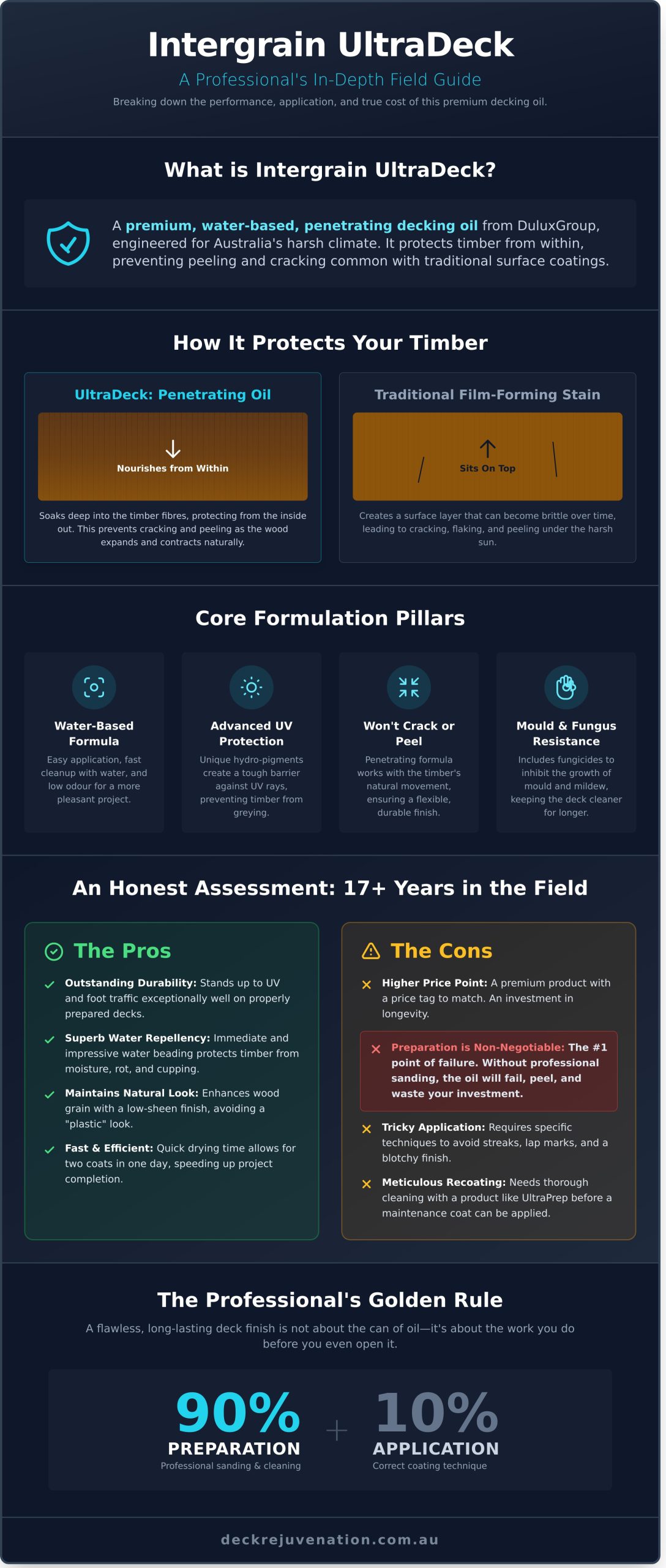
Unlike traditional film-forming stains that sit on the surface and can eventually crack or peel, Intergrain UltraDeck is a penetrating oil. This means it soaks deep into the timber fibres, nourishing and protecting the wood from within. The result is a durable finish that works with the timber, not just against the elements, preventing premature greying and decay without the risk of flaking.
Key Features and Formulation
Understanding what’s inside the tin explains why this product delivers superior results. Its formulation is built on four key pillars that directly address the main causes of timber degradation.
- Water-Based Formula: This makes for a much easier application and cleanup process-no harsh solvents are needed, just water. It also means a lower odour during and after application, which is a significant benefit for any home project.
- Penetrating Oil: The oil deeply penetrates the timber to protect it from the inside out. This prevents the coating from becoming brittle and ensures it won’t crack, peel, or blister as the timber naturally expands and contracts.
- Advanced UV Protection: It contains unique hydro-pigments that provide a tough barrier against damaging ultraviolet rays, which are the primary cause of timber turning grey and breaking down.
- Mould and Fungus Resistance: The formula includes fungicides designed to resist the growth of mould and mildew, keeping your deck looking clean and healthy for longer.
Available Tints and Finishes
Intergrain UltraDeck is designed to enhance the natural beauty of your timber, not hide it. It provides a clean, low-sheen finish that looks natural and feels great underfoot. The tints are semi-transparent and are formulated to complement the most popular Australian decking timbers, including Merbau, Jarrah, and Spotted Gum. A crucial point for homeowners is that the ‘Natural’ tint is not a clear coat; it contains transparent pigments that are essential for providing UV protection. Choosing a tint not only defines the look of your deck but also maximises its defence against the sun.
Pros & Cons: An Honest Assessment from 17+ Years in the Field
After more than 17 years restoring decks across Melbourne, I can tell you one thing for certain: there is no single “best” deck coating. Every product has its place. The real secret is matching the right product to the timber, the environment, and, most importantly, the quality of the preparation. The marketing on the tin tells you one story; how it performs year after year in Melbourne’s brutal, fluctuating weather tells the real one.
Here’s our honest, no-nonsense assessment of Intergrain UltraDeck, a product we use frequently but also treat with immense respect for what it demands.
The Pros: Why We Often Use UltraDeck
When a client wants premium, long-lasting protection that showcases the timber’s natural beauty, this is one of the first products we consider. It’s a high-performance formula, and when applied correctly, the results speak for themselves.
- Outstanding Durability: On a meticulously prepared and sanded deck, its longevity is exceptional. It stands up to UV rays and foot traffic far better than many cheaper oils, which is critical for a long-term investment.
- Superb Water Repellency: The water beading effect is immediate and impressive. This isn’t just for looks; it’s a clear visual indicator that the timber is sealed and protected from moisture ingress, which causes rot and cupping.
- Maintains the Natural Look: Unlike thicker coatings that can look like a layer of plastic, UltraDeck penetrates the timber to enhance the grain. The finish lets the timber breathe and look like real wood, not a painted surface.
- Fast & Efficient Application: Its quick drying time is a major practical advantage. It allows us to apply the crucial second coat on the same day, meaning we can complete your entire deck restoration faster. It’s also a product with a strong focus on sustainability, backed by a third-party environmental certification for its low VOC formulation.
The Cons: What You Must Be Aware Of
This is not a product for cutting corners. Its high-performance nature means it is extremely unforgiving of mistakes. Here’s what you absolutely must know before choosing it.
- Higher Price Point: This is a premium product with a price tag to match. Expect to pay more per litre than standard decking oils. The investment is in the advanced formulation, but it must be factored into your budget.
- Preparation is Non-Negotiable: This is the single biggest point of failure. If the deck isn’t professionally cleaned and sanded back to fresh, clean timber, Intergrain UltraDeck will not bond correctly. It will peel, flake, or wear away in months, and you’ll have wasted your money.
- Tricky Application: Achieving a smooth, even finish without streaks or lap marks requires a specific technique and the right tools. Applying it in direct sun or windy conditions can make it dry too quickly, leading to a blotchy result.
- Meticulous Recoating: When it’s time for a maintenance coat, you can’t just slap another layer on. The surface must be thoroughly cleaned with a product like UltraPrep to remove all dirt and contaminants, otherwise the new coat will look patchy and uneven.
How to Apply Intergrain UltraDeck: The Professional Method
Achieving a flawless, long-lasting deck finish is 90% preparation and only 10% application. This is a non-negotiable truth in our industry. While many look for shortcuts, the professional method is about meticulous, upfront work that guarantees your deck not only looks stunning but is also genuinely protected. Here is the three-phase process we follow for every project-the benchmark for a job done right.
Phase 1: The Critical Sanding and Preparation
Sanding is the foundation of a professional finish. It’s not just about making the timber smooth; it’s about removing failed old coatings and the top layer of grey, dead wood fibres. We use a sequence of grits to methodically open the timber’s grain, allowing the Intergrain UltraDeck to penetrate deeply rather than just sit on the surface. This is also where we rectify cupped boards and countersink every nail for a perfectly level surface. This entire, labour-intensive step is what most DIYers and cheap contractors skip, and it’s precisely why their finishes fail within a year.
Phase 2: Cleaning and Brightening the Timber
Once sanding is complete, the deck must be forensically cleaned. We use a dedicated timber cleaner like Intergrain PowerPrep to lift and remove all the fine sanding dust and hidden contaminants from the grain. This is followed by a brightening step with a product like Intergrain UltraPrep, which neutralises the timber and restores its natural colour. A word of warning: never let anyone simply blast your deck with a high-pressure washer. If used incorrectly, it can permanently damage the soft grain of the wood, leaving ugly, irreversible gouge marks.
Phase 3: Applying the Coats for a Flawless Finish
With a perfectly prepared surface, the application can begin. For a professional result, we recommend a quality decking applicator or brush, not a roller, which can cause pooling and an uneven finish. The key is the ‘wet-on-wet’ technique:
- Coat 2-3 boards at a time, along their full length.
- Always maintain a wet edge to avoid ugly lap marks where sections overlap.
- Apply the correct number of coats-usually two, but sometimes three for high-traffic areas.
Finally, always apply your coating in the shade on a cool day. Applying Intergrain UltraDeck in direct sun or onto hot boards will cause it to flash-dry, leading to a poor finish and reduced durability.
UltraDeck vs. The Competition: A Head-to-Head Comparison
As professional restorers, we know Intergrain UltraDeck is a premium product, but it’s not the only option on the shelf. Making the right choice isn’t about marketing claims; it’s about understanding the practical differences in longevity, appearance, and future maintenance. Here’s our honest, no-nonsense breakdown based on years of field experience to help you make an informed decision for your deck.
Intergrain UltraDeck vs. Cabot’s Aquadeck
These are the two heavyweights of water-based decking oils in Australia, and for good reason. While both are excellent products, they have subtle but important differences. In our extensive experience, UltraDeck provides a slightly richer, deeper finish that truly enhances the timber grain, looking more like a traditional penetrating oil. Aquadeck is also a fantastic product but can sometimes sit more on the surface, creating a slightly more noticeable film. Durability is high for both, but we consistently find UltraDeck offers superior UV resistance and scuff protection, giving you a longer-lasting finish, especially on sun-drenched hardwood decks. Price-wise, they are very competitive, but the extra months of protection from UltraDeck often deliver better long-term value.
Water-Based UltraDeck vs. Traditional Oil-Based Stains
This is less about specific brands and more about a fundamental difference in technology. Choosing between them has massive implications for the look and upkeep of your deck.
- Protection & Longevity: Water-based oils like UltraDeck penetrate the timber while also forming a durable, flexible acrylic film on the surface that breathes with the wood. This layer provides superior protection from weather and foot traffic. Traditional oils mainly soak in, leaving the surface more exposed and often requiring a recoat every 6-12 months.
- Appearance: A deck coated with Intergrain UltraDeck maintains a more natural, clean look. Traditional oils can darken significantly over time and attract mould and grime, leading to a dirty, almost sticky appearance that hides the timber’s beauty.
- Maintenance: This is the deal-breaker. When it’s time to recoat a water-based oil, the preparation is usually a simple, thorough clean. Recoating a failed traditional oil often means a full, back-breaking sand to remove the old, degraded coating. For ease of maintenance, modern water-based oils are the smarter choice.
Choosing the right product is half the battle; meticulous preparation and application is the other. If you want a flawless, long-lasting finish without the guesswork, get in touch for an honest assessment of your deck.
Why Your UltraDeck Finish Will Fail Without Professional Preparation
You can spend over A$250 on a premium tin of Intergrain UltraDeck, but it’s a complete waste of money if it’s applied to a poorly prepared deck. This is the hard truth many DIY guides skip over. We see the results all the time: peeling finishes, ugly, patchy sections, and a deck that looks worse than when you started-all within a single season. The premium oil isn’t the problem; the lack of professional preparation is.
The #1 Mistake: Inadequate Sanding
The most common shortcut is a quick ‘light sand’ with a hired orbital sander. This approach barely skims the surface. It fails to remove the deep-set, grey, dead timber fibres that block oil absorption. Worse, it does nothing to rectify cupped or uneven boards, a common issue in Australian decks. You simply cannot apply oil to sealed, weathered timber and expect it to last. The coating sits on top like a film, unable to penetrate, and is guaranteed to fail under our harsh sun.
Our meticulous 5-wave sanding process is the genuine solution. Using heavy-duty belt sanders, we systematically strip back the entire damaged surface, level the boards with precision, and expose fresh, thirsty timber. This is the only way to guarantee the deep oil penetration required for a lasting, uniform finish that protects your timber from within.
How Our 9-Step Process Guarantees a Lasting Finish
Proper sanding is the cornerstone, but a truly durable finish is the result of a complete system. Our ‘no shortcuts’ philosophy is built into a comprehensive 9-step process that leaves nothing to chance. From initial assessment and punching every nail to cleaning and applying multiple, perfectly even coats, each step is critical. We don’t just apply a coating; we restore the health of your timber to ensure the finish performs exactly as it should.
Protecting your deck is a significant investment. Don’t risk a costly DIY disaster that will need a professional to rectify later. When you’re ready for a flawless Intergrain UltraDeck finish that endures, trust the process that guarantees it. See our proven rejuvenation process.
The Bottom Line: A Great Finish Demands a Flawless Foundation
So, what’s the final word? Intergrain makes a premium Australian product, but the most critical takeaway from our 17+ years in this trade is simple: the best coating in the world will fail on a poorly prepared surface. The true longevity of your Intergrain UltraDeck finish isn’t just in the can; it’s in the craftsmanship of the preparation. A quick power wash and a slap-on coat is a recipe for peeling and disappointment. A flawless, long-lasting result is only possible with a perfectly smooth and professionally sanded foundation.
This is where our process makes the difference between a 12-month touch-up and years of genuine protection. As a family business, we provide honest advice with no shortcuts. Our meticulous 5-wave sanding process creates the ideal surface that most applicators skip, ensuring maximum oil penetration and a finish that lasts.
Don’t risk your investment on poor prep work. Ensure your investment lasts. Get a quote for our professional 9-step restoration. Your deck is a valuable part of your home-give it the expert foundation it deserves.
Frequently Asked Questions About Intergrain UltraDeck
How long does Intergrain UltraDeck actually last in Melbourne?
In Melbourne’s harsh, fluctuating climate, the lifespan of Intergrain UltraDeck depends heavily on preparation and exposure. A properly coated deck will typically need maintenance every 12 to 18 months. Decks with full sun exposure will require attention closer to the 12-month mark. The key isn’t a magic number; it’s regular inspection. Look for signs of water no longer beading or colour fading-that’s your cue for a maintenance coat to keep the timber protected.
Can I apply UltraDeck over an old oil or stain?
Absolutely not. Applying a water-based coating like UltraDeck over an old, failing oil or stain is a recipe for disaster. The new coating won’t penetrate or adhere properly, leading to peeling and a blotchy finish within months. The only correct way is to completely remove the old finish. This requires a thorough stripping and sanding process to take the timber back to a fresh, clean surface. Skipping this critical step guarantees a short-lived, poor-quality result.
What is the recoating process for a deck previously finished with UltraDeck?
Recoating a deck already finished with UltraDeck is straightforward if done correctly. First, you must give the deck a meticulous clean with a specialised product like Intergrain UltraPrep Deck Clean. This removes dirt, grime, and any surface contaminants. Once the deck is completely dry, you can apply a single, fresh maintenance coat of UltraDeck. This rejuvenates the protection and colour without the need for a full strip and sand, provided the original coating is still intact.
Is Intergrain UltraDeck suitable for new Merbau or Spotted Gum decks?
Yes, UltraDeck is an excellent choice for new Australian hardwoods like Merbau and Spotted Gum, but proper preparation is non-negotiable. These timbers are dense and rich in tannins, which can bleed out and interfere with the coating’s adhesion. You must weather the new deck for 4-6 weeks and then clean it thoroughly with a preparation product like Intergrain UltraPrep Tannin & Oil Remover. This process ensures deep penetration and a professional, long-lasting finish.
How many coats of UltraDeck should I apply for the best protection?
For new or bare timber, we always recommend a minimum of three coats for genuine, lasting protection. The first coat acts as a primer, penetrating and sealing the timber grain. The second and third coats build the protective layer that provides UV resistance and durability against foot traffic and weather. Applying only two coats is a common shortcut that significantly shortens the life of the finish and leaves your timber vulnerable sooner. Don’t cut corners here.
What is the drying time between coats for UltraDeck?
Under ideal conditions-around 25°C with good airflow-UltraDeck is typically ready for a recoat in about 2 hours. However, this can change. On cooler or more humid Melbourne days, you should allow at least 4 hours to be safe. Always check that the surface is completely dry to the touch and not tacky before applying the next coat. Rushing this step can compromise the bond between layers and affect the final durability of the finish.
Leave a Reply