It’s a frustratingly common story for Melbourne homeowners: you pay for your deck to be oiled, it looks fantastic for a few months, and then the harsh weather strips it back to a tired, grey state. You’re left wondering if you hired the right person or if a long-lasting finish is even possible. The truth is, the problem isn’t your timber; it’s the shortcuts. A genuine deck oiling service Melbourne homeowners can trust is built on meticulous preparation and a process that ensures deep timber penetration, not just a superficial shine that fails in the first season.
In this article, we’re pulling back the curtain. We’ll show you exactly what separates a cheap, fast job from a professional finish that actually lasts. You will learn the non-negotiable steps for deep timber protection, how to identify an expert who won’t cut corners, and what a truly durable, beautiful deck should look like. Forget the cycle of re-oiling every year; it’s time to get the job done right, the first time, and enjoy your outdoor space with complete peace of mind.
Key Takeaways
- Discover the #1 reason most oiled decks fail within a year, and how meticulous preparation is the key to a finish that lasts.
- Understand the critical difference between a superficial oil coat and a professional treatment that achieves deep timber penetration for genuine protection.
- Learn why a professional deck oiling service melbourne selects specific oils designed to withstand our city’s harsh sun and rain, ensuring your investment is protected.
- Identify the key signs that your deck needs more than a simple DIY top-up and requires expert attention to prevent further damage.
- See why a ‘cheap’ quote often costs you more in the long run and what a quality, transparent quote should always include.
The Critical Mistake: Why Most Deck Oiling Fails Within 12 Months
It’s a frustratingly common story for Melbourne homeowners. You invest in a professional to restore your deck, and it looks brilliant for the first few months. But before the year is out, you see the tell-tale signs of failure: peeling, flaking, and grey, weathered timber showing through. You’re left wondering what went wrong. The problem isn’t the oil; it’s the application.
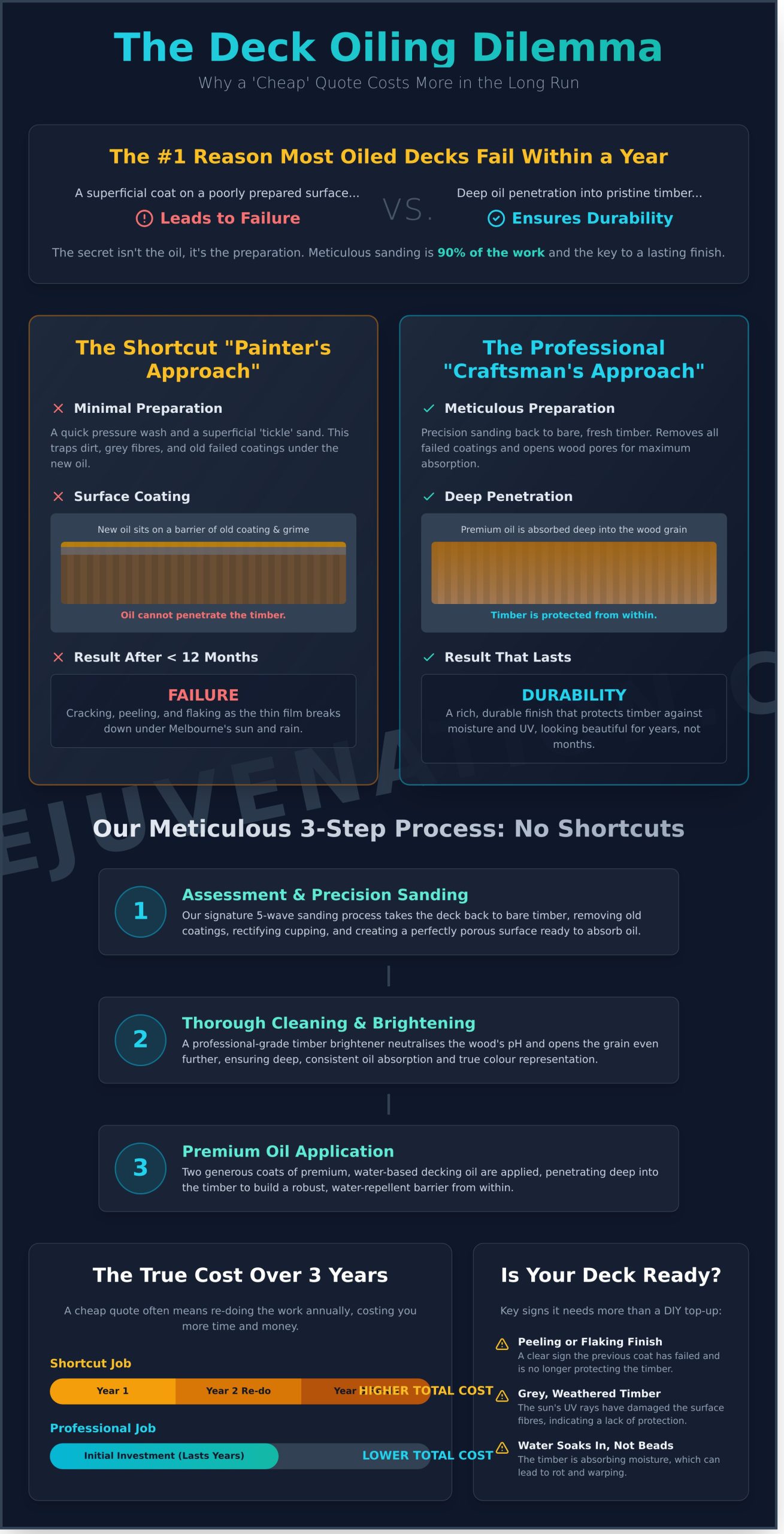
The single biggest reason for premature deck coating failure is poor preparation. Many companies offering a cheap deck oiling service melbourne will cut corners where it matters most. They know that proper sanding is the hardest, most time-consuming part of the job-it’s 90% of the work. By skipping this, they can get in and out quickly. This lazy approach traps a layer of dead timber fibres, dirt, and old failed coatings right where you don’t want it: under your brand new oil.
This deck was oiled less than a year ago. The peeling is a direct result of new oil being applied over an improperly prepared surface.
Surface Coating: The ‘Painter’s Approach’
This is the shortcut method. It involves a quick pressure wash and a superficial ‘tickle’ with a sander that does little more than scuff the surface. The old, failed coating remains, acting as a barrier. When new oil is applied, it has nowhere to go. It can’t soak into the timber, so it sits on top as a thin, weak film. While it might look acceptable initially, Melbourne’s harsh UV exposure quickly causes it to dry out, crack, and peel away. It’s a short-term fix that costs you far more in the long run.
Deep Penetration: The ‘Craftsman’s Approach’
We do the opposite. Our process is built on a foundation of meticulous preparation with no shortcuts. We use precision sanding equipment to take your deck back to fresh, bare timber, removing every trace of the old finish and weathered fibres. This critical step opens the pores of the wood, allowing it to properly absorb the nourishing oil. This is the essence of true wood finishing; it’s about working with the timber, not just painting over it. The premium oil soaks deep into the grain, protecting it from within and replenishing its natural defences against moisture and sun. This is the secret to a rich, durable finish that lasts.
Our Meticulous Deck Oiling Process: No Shortcuts, Just Results
A stunning, long-lasting finish isn’t achieved by chance-it’s the result of a rigorous, methodical process. At Deck Rejuvenation, our work begins long before a can of oil is opened. We don’t just paint over problems; we rectify them at the source. This ensures the final oil finish is not just a cosmetic layer but a genuine restoration that protects your timber from the inside out. When you choose our deck oiling service Melbourne, you’re investing in a proven system that treats your deck as the valuable asset it is.
Step 1: Assessment and Precision Sanding
Every project starts with an honest, upfront assessment of your deck’s condition. We then perform our signature 5-wave sanding process-a crucial step most competitors skip to save time. This intensive process doesn’t just strip old, failed coatings; it physically rectifies issues like cupping and levels uneven boards. By using multiple grits, we create a perfectly smooth, porous surface that is ready to drink in the new oil, ensuring maximum penetration and a flawless finish.
Step 2: Thorough Cleaning and Brightening
Sanding is only half the preparation. Once the timber is perfectly smooth, we conduct a deep clean to remove every trace of dust and contamination. We then apply a professional-grade timber brightener. This isn’t just a cleaning agent; it neutralises the timber’s pH and opens up the wood grain even further. This critical step guarantees that the premium oil we apply will absorb deeply and its colour will appear true and consistent across every single board.
Step 3: Application of Premium Decking Oil
With the timber perfectly prepared, we apply two generous coats of premium, water-based decking oil using professional-grade applicators for a smooth, even finish. This method ensures the oil penetrates deep into the timber, not just sitting on top. As detailed in technical guides like the Wood Preservation Handbook, effective protection relies on the preservative saturating the wood’s cellular structure. We strictly adhere to manufacturer-specified drying times between coats, building up a robust, water-repellent barrier inside the timber that stands up to Melbourne’s harsh weather.
Choosing the Right Oil for Melbourne’s Harsh Climate
Not all decking oils are created equal. This is especially true in Melbourne, where your timber is constantly battling a cycle of intense UV exposure one day and soaking rain the next. A cheap, off-the-shelf product simply cannot withstand this punishment and will lead to premature fading, peeling, and timber damage. The oil we apply is the single most important barrier protecting your investment.
That’s why we don’t offer a “good, better, best” range of options. We only use the best. After years of testing and seeing the results firsthand, we exclusively use premium, modern water-based decking oils. These advanced formulas offer genuine, long-lasting protection that traditional oils can’t match, providing superior UV resistance and the flexibility needed to handle timber’s natural expansion and contraction.
Why We Use Water-Based Decking Oils
Many people still associate “oil” with thick, solvent-based products. The truth is, modern water-based technology has surpassed them in almost every way. As a specialist deck oiling service in Melbourne, we rely on these formulas because they deliver superior results without the common drawbacks of old-fashioned oils.
- Deep Penetration: They soak deep into the timber grain to nourish and protect from within, rather than forming a thick, sticky film on the surface that eventually cracks and peels.
- Lasting Durability: These oils are significantly more resistant to UV damage, meaning they won’t fade or break down as quickly under the harsh Australian sun.
- Timber Health: The finish is microporous, allowing the timber to breathe. This drastically reduces the risk of moisture getting trapped, which leads to rot, mould, and mildew.
- Faster Turnaround: Quicker drying times mean less disruption for your family. Your deck is protected and ready to use much sooner.
Colour and Finish Options
Opting for a high-performance oil doesn’t mean sacrificing appearance. We offer a curated range of natural timber tones designed to enhance, not hide, the beauty of your deck. From the rich reds of Merbau to the golden browns of Spotted Gum, the oil penetrates the grain to accentuate its unique character and depth.
During our on-site consultation, we’ll guide you through the options, helping you select a finish that perfectly complements your timber type, home exterior, and landscaping. We bring the samples to you so you can see exactly how they’ll look on your deck. Request a quote and see our colour samples.
Is Your Deck Ready for Professional Oiling? 5 Key Signs
Knowing when to call in a professional can be the difference between a simple rejuvenation and a costly deck replacement. A quick DIY top-up might seem like an easy fix, but it often just covers up deeper issues, trapping moisture and leading to rot. A proper deck oiling service in Melbourne starts with an honest assessment of the timber’s condition.
If you see any of the following signs, your deck is sending a clear signal that it needs more than a surface-level touch-up. Acting early prevents these minor warnings from escalating into major structural problems.
1. The Water Test: Does It Bead or Soak In?
This is the simplest and most definitive test. Splash a small amount of water onto a few different areas of your deck. If the water beads up into droplets, your deck’s protective layer is still doing its job. However, if the water immediately soaks into the timber, creating a dark patch, the wood is exposed and vulnerable. It’s thirsty for oil and absorbing moisture, which is the first step towards rot and decay.
2. Greying and Fading Timber
That silver-grey look isn’t a distinguished patina; it’s a sign of UV damage. The sun’s harsh rays have broken down the timber’s natural lignins and destroyed the previous coating. You may also see patchy, faded areas where foot traffic is highest. Simply oiling over grey, damaged wood is a waste of time and money. The dead fibres must be professionally sanded back to reveal fresh, healthy timber that can properly absorb the new oil.
3. Splintering, Cracking, or Cupping
When timber loses its natural oils, it dries out, shrinks, and becomes brittle. This leads to splinters that are hazardous underfoot and fine cracks (known as checking) on the surface. In more advanced cases, you’ll see “cupping,” where the edges of the boards are higher than the centre. These are not just cosmetic issues; they are signs that the timber is losing its structural integrity. A professional service will sand the boards level and use a premium oil that penetrates deep to restore moisture and flexibility.
4. Mould, Mildew, or Dark Stains
Dark spots, green patches, or a slippery film are clear indicators of mould and algae growth. This means your deck is retaining too much moisture, creating the perfect breeding ground for organisms that accelerate timber rot. Applying oil over mildew will only trap the spores underneath, allowing them to thrive and destroy the wood from within. The deck must be thoroughly cleaned and treated before any protective coating is applied.
5. The Old Coating is Peeling or Flaking
If your deck has a peeling, blistering, or flaking surface, it was likely coated with an inferior acrylic stain or cheap oil that sits on the surface instead of penetrating. New oil cannot bond to or penetrate through this failing layer. Attempting to coat over it will result in a patchy, uneven finish that fails within months. The only correct solution is to have the old coating completely stripped and sanded off, creating a clean slate for a professional-grade oil that protects the timber correctly.
If your deck is showing one or more of these critical signs, it’s time for an honest, expert assessment. Learn more about our meticulous process at deckrejuvenation.com.au and see how we restore decks the right way, with no shortcuts.
The True Cost: Professional Service vs. a ‘Cheap’ Quote
When you’re searching for a deck oiling service melbourne, a cheap quote can be tempting. But in our climate, that low price is almost always a red flag. It means critical preparation steps are being skipped to cut costs, leading to a finish that looks acceptable for a few months before it inevitably fails.
A cheap oiling job that is peeling and faded in six months is no bargain. It’s a costly mistake that forces you to pay twice: once for the initial poor-quality work, and a second time for a professional to come in, strip it all back, and do it correctly.
The Hidden Costs of a Rushed Job
A quote that seems too good to be true hides significant future expenses. When a cheap coating fails, you’re not just back where you started; you’re in a much worse position. The real costs include:
- Expensive Rectification: The failed, peeling coating must be aggressively sanded off your entire deck. This is far more labour-intensive and costly than preparing the timber correctly from the start.
- Permanent Timber Damage: Poorly applied coatings can trap moisture against the wood, promoting mould, rot, and cupped boards that may need replacing.
- The Frustration Factor: You’re left with an ugly, patchy deck that detracts from your home’s value and your ability to enjoy your outdoor space.
- The Annual Cycle: You get trapped in a cycle of paying for cheap re-coats every 12-18 months, costing you far more time and money in the long run.
The Value of a Professional Finish
Our service is an investment in your property’s longevity and value. We don’t cut corners. Our meticulous process is designed to deliver a premium finish that deeply penetrates and protects your timber for years, not months. This approach delivers genuine, long-term value.
- Lasting Protection: A superior finish extends the time between maintenance, saving you money and hassle year after year.
- Asset Preservation: We properly protect your timber from the elements, preventing permanent damage and the high cost of board replacement.
- Honest and Transparent Process: We provide a detailed, upfront quote with no hidden fees. You know exactly what you’re paying for-a job done right. Family Business. Honest Advice. No Shortcuts.
Don’t fall into the trap of a cheap quote that costs you more in the end. Get an honest assessment for your deck and invest in a professional finish that adds lasting value and beauty to your home.
The Final Word: Shortcuts Don’t Last. Our Finishes Do.
As we’ve covered, the difference between a deck that looks good for a few months and one that stays protected for years comes down to one thing: process. A ‘cheap’ quote almost always means skipped steps, inferior oils, and a finish that can’t stand up to Melbourne’s harsh weather. The true value lies in a meticulous approach that addresses underlying issues like cupping and ensures deep, lasting oil penetration.
Choosing the right deck oiling service Melbourne homeowners trust is an investment in your home’s value and your own peace of mind. With 17+ years of family-run experience and over 180 five-star reviews, we don’t take shortcuts. We genuinely fix cupped and uneven boards, providing honest advice and a finish built to endure.
Stop the cycle of yearly re-oiling and see the difference a professional makes. Ready to give your deck the lasting protection it deserves? Get Your Free, No-Shortcuts Quote Today.
Frequently Asked Questions
How often should my deck be professionally oiled in Melbourne?
In Melbourne’s harsh climate, most decks require re-oiling every 12 months to protect against sun and rain. Decks with high sun exposure may need it every 6-9 months. When you hire a professional deck oiling service melbourne, our honest assessment will give you the right schedule. Waiting too long allows UV damage and moisture to penetrate the timber, leading to costly repairs down the line. Regular maintenance is the only way to guarantee longevity.
How long does the deck oiling process take from start to finish?
A proper job is never rushed. For an average-sized deck, the entire process spans 2-3 days. Day 1 is for meticulous preparation: a deep clean and, if needed, precision sanding to rectify issues like cupping. We then allow the timber to dry completely overnight. Day 2 involves the careful application of premium oil. This multi-day process ensures the oil penetrates deeply for maximum protection, something a one-day shortcut can never achieve.
Can you oil a new timber deck straight away?
No, and any tradesperson who says you can is taking a shortcut. New timber contains tannins and mill glaze that prevent oil from penetrating properly. The deck must “weather” for 4-6 weeks to allow the wood’s pores to open. After this period, we perform a specialised preparation clean to remove released tannins before applying the first protective coat. This crucial step is non-negotiable for a durable, long-lasting finish.
What’s the difference between deck oil and deck stain?
Deck oil is a penetrating finish. It soaks into the timber to nourish it from within, protecting against moisture and highlighting the natural grain. Deck stain is a coating that sits on the surface, forming a film and changing the timber’s colour. We almost always recommend premium oils because they don’t chip or peel like stains can. Oil provides genuine, deep protection, which is the honest path to a longer-lasting and healthier deck.
Do I need to be home while you are working on my deck?
No, you do not need to be home. As long as we have clear access to the deck area, an external power point, and a water tap, our team can complete the entire job without disturbing your day. We are a trusted, family-run business and will treat your property with complete respect. We communicate our schedule clearly, so you know exactly when we’ll be on-site and when the project is finished.
How long after oiling can I walk on my deck and put furniture back?
For the best result, you must allow the oil to cure properly. We advise staying off the deck entirely for a minimum of 24 hours. After that, light foot traffic is generally okay. However, you should wait at least 48-72 hours before moving heavy furniture, pot plants, or barbecues back onto the surface. Rushing this step can easily scuff the new finish and compromise the protective barrier we’ve worked hard to create.
Leave a Reply