
That peeling, flaky deck stain is more than just an eyesore; it’s a sign that a previous job wasn’t done right. If you’re looking at your neglected deck and wondering how to remove old peeling deck stain without gouging the timber or creating a chemical mess, you’re not alone. It’s a frustrating problem we see homeowners across Australia face, often after a previous coating has failed in less than a year. The good news is that you can achieve a professional-quality result and avoid repeating past mistakes.
In this guide, we cut through the bad advice. We’ll show you the meticulous, expert-approved methods for stripping a failed coating safely and effectively. More importantly, we’ll explain exactly *why* your stain peeled in the first place-the critical knowledge you need to guarantee a flawless, long-lasting finish next time. You’ll gain the confidence to restore your deck properly, ensuring your hard work pays off for years, not just a single season.
Key Takeaways
- Peeling stain is a symptom of coating failure, not just wear. You must diagnose the root cause first to ensure your new finish actually lasts.
- Your two main options are chemical stripping or professional sanding. We’ll show you how to choose the right method to get your timber back to a bare, workable state.
- Discover the professional’s step-by-step process for how to remove old peeling deck stain using a sander for a perfectly smooth surface ready for maximum oil penetration.
- Many common DIY shortcuts can permanently damage your timber and leave it looking worse than before. Learn the critical mistakes to avoid for a flawless result.
First, Why Is Your Deck Stain Peeling? Diagnosing the Root Cause
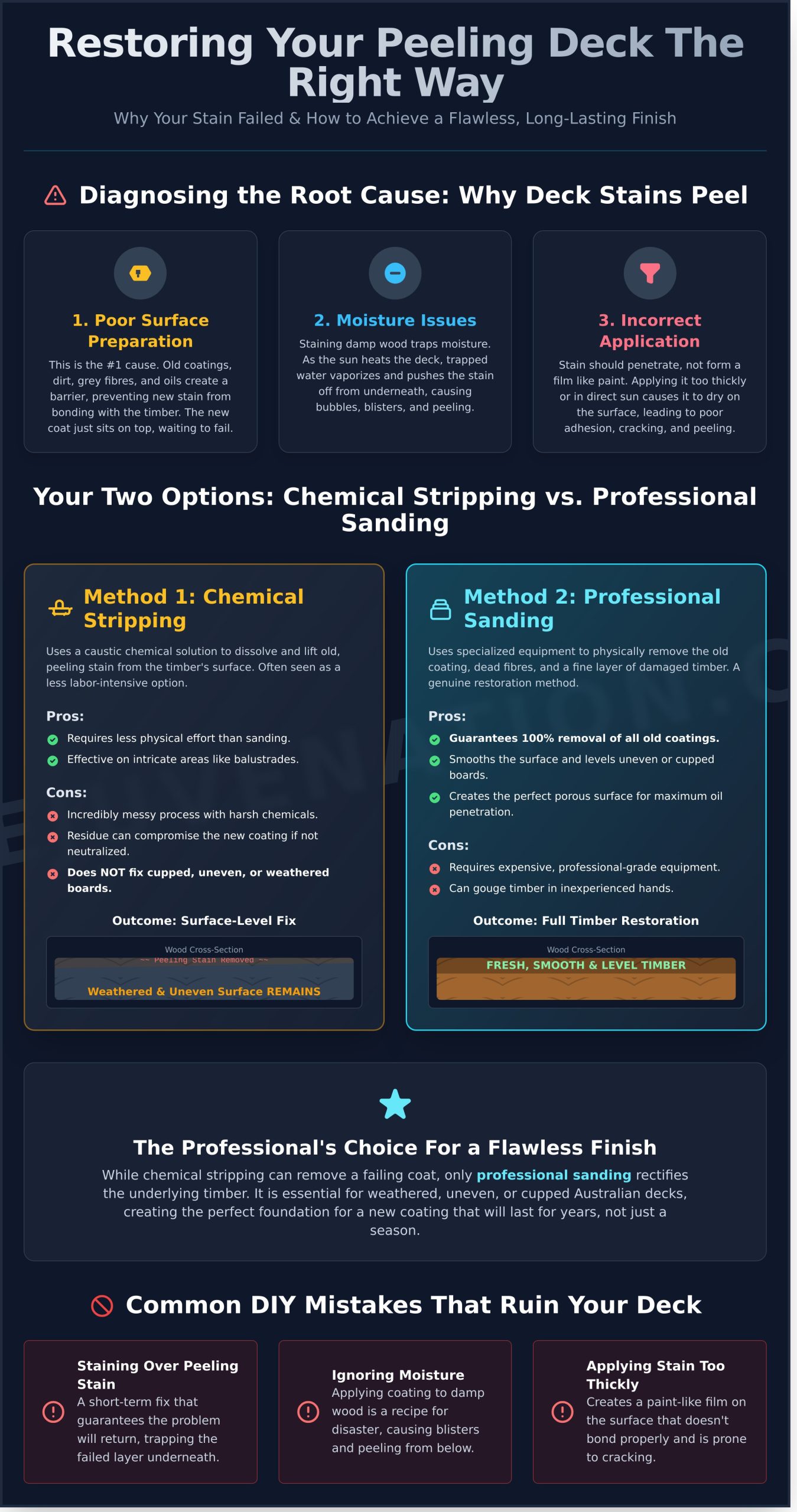
Seeing your deck stain flake and peel away is frustrating. Many homeowners assume it’s just normal wear and tear, but it’s a clear sign of coating failure. The stain has lost its bond with the timber, and simply applying another coat over the top is the most common mistake we see. It’s a short-term fix that guarantees the problem will return, costing you more time and money.
Before you even think about how to remove old peeling deck stain, you must understand why it failed in the first place. Diagnosing the root cause is the only way to ensure your hard work lasts and your deck stays protected for years, not months.
Poor Surface Preparation
This is the number one cause of peeling stain. No exceptions. A new coat of stain is only as good as the surface it’s applied to. If old, failing coatings, built-up dirt, grey fibres, or invisible oils and mill glaze aren’t meticulously removed, they create a barrier. A crucial part of understanding the wood finishing process is knowing that the new stain cannot penetrate the timber; it just sits on this contaminated surface, waiting to fail.
Moisture Issues
Timber is porous, and applying stain to damp wood is a recipe for disaster. It traps moisture underneath the new coating. As the sun heats your deck, this trapped water turns to vapour and tries to escape, pushing the stain directly off the surface from beneath. This is why you see bubbles, blisters, and eventually, large peeling flakes. Always ensure your timber is bone-dry before you begin staining-a moisture meter is the only way to be certain.
Incorrect Application
Deck stain is not paint. It is designed to penetrate and soak into the wood fibres, protecting them from within. A common mistake is to apply it too thickly, creating a film that sits on the surface just like paint. This film doesn’t bond properly and is prone to cracking and peeling. Applying stain in direct, hot sunlight can also cause it to flash-dry on the surface before it has a chance to penetrate, leading to the same result.
Your Two Options: Chemical Stripping vs. Professional Sanding
Once you understand why your deck stain is failing, you can choose the right way to fix it. The goal is always the same: to take the timber back to a fresh, bare state, ready for a new protective coating. However, the two primary methods for achieving this offer vastly different results.
Your choice between chemical stripping and mechanical sanding comes down to the condition of your deck and whether you’re after a quick fix or a genuine, long-term restoration. One method cleans the surface; the other rectifies the timber itself.
Method 1: Chemical Stripping
This method uses a caustic chemical solution to dissolve and lift the old, peeling stain from the timber’s surface. It’s often promoted as an easier, less labour-intensive option.
- Pros: Requires less physical effort than sanding and can be effective on intricate areas like balustrades where sanders can’t easily reach.
- Cons: It’s an incredibly messy process that involves harsh chemicals. The deck must be thoroughly washed and neutralised afterwards, or the residue will compromise the new coating. Most importantly, stripping does absolutely nothing to fix cupped, uneven, or weathered boards.
Ultimately, stripping is a surface-level solution. It removes the old paint but doesn’t rejuvenate the timber underneath.
Method 2: Mechanical Sanding
Professional sanding involves using specialised equipment to physically abrade the old coating and a fine layer of damaged timber. This is the method we use because it’s about genuine restoration, not just removal.
- Pros: Guarantees 100% removal of all old coatings and dead timber fibres. It smooths the entire surface, levels uneven boards, and is the only way to rectify cupping. This creates a perfect, porous surface for maximum penetration of new oil.
- Cons: Requires expensive, professional-grade equipment and the skill to use it. In inexperienced hands, it’s easy to gouge the timber and create an even bigger problem.
This is the professional’s choice for a flawless, long-lasting finish. No shortcuts.
Which Method Is Right for You?
For a new, perfectly flat deck with a single, lightly failing coat, chemical stripping might seem viable. If you’re considering the DIY route, a detailed step-by-step guide to removing flaking deck stain can show you the process. However, for the vast majority of weathered Australian decks with uneven, grey, or cupped boards, sanding is essential.
The correct approach for how to remove old peeling deck stain is about preparing a perfect foundation. For a truly professional result that protects your timber for years, sanding is always the superior method. It’s the only way to ensure your deck doesn’t just look new, but is genuinely restored.
The Professional Method: How to Sand a Peeling Deck Step-by-Step
If you want a finish that lasts for years, not just a few months, this is the method to follow. This isn’t about a quick pass with a hired sander; it’s a meticulous process designed to achieve one critical goal: a perfectly smooth and porous timber surface. This level of preparation is the secret to maximum oil penetration and a finish that won’t fail prematurely. Follow these steps for a result that mirrors a genuine professional job.
Step 1: Preparation and Safety
Proper preparation prevents costly mistakes and ensures a smooth workflow. Before you start, clear the deck of all furniture, pots, and barbecues. Inspect the boards and countersink any raised nail or screw heads below the surface to avoid tearing your sandpaper and damaging the machine. Give the entire deck a thorough sweep to remove loose dirt and debris. Most importantly, protect yourself. Always wear appropriate safety gear:
- Dust mask (P2-rated)
- Safety goggles
- Hearing protection
Step 2: The Multi-Stage Sanding Process
Effective sanding is a multi-stage process, not a single action. This methodical approach is fundamentally how to remove old peeling deck stain while also levelling the timber. Start with a coarse, aggressive grit like 40-grit on a powerful belt sander for the main deck area, always moving with the grain of the wood. This first pass does the heavy lifting, stripping away the failed coating. For corners, edges, and areas against the house, use a detail or edge sander. Once the old stain is gone, progress through finer grits-typically 60-grit then 80-grit-to remove the sanding marks left by the coarser paper and create a beautifully smooth surface.
Step 3: Final Cleaning and Brightening
This final step is non-negotiable and what separates a professional finish from an amateur one. All the sanding dust must be removed. Use a vacuum and a leaf blower to meticulously clear the dust from the surface and between the boards. Next, wash the deck with a specialised deck cleaner to remove any remaining fine dust particles. To complete the preparation, apply a wood brightener. This crucial step neutralises the cleaner and opens up the timber’s pores, allowing the new coating to penetrate deeply and evenly. Allow the deck to dry completely-often 24-48 hours depending on the weather-before applying any oil or stain.
Common DIY Mistakes That Can Ruin Your Deck
On paper, the process of how to remove old peeling deck stain looks straightforward. But the difference between a professional result and a costly disaster lies in the details. Doing the job is one thing; doing it well requires precision.
One wrong move with a powerful sander or a skipped cleaning step can leave your timber gouged, patchy, and in worse shape than when you started. Understanding these common pitfalls is key to deciding whether this is a job you should tackle yourself. This is precisely why professional experience and commercial-grade equipment are not just nice-to-haves-they are essential for a flawless, long-lasting finish.
Using the Wrong Sander or Grit
Many DIY attempts fail with the wrong tools. A standard orbital sander from a hardware store often lacks the power to strip a stubborn, baked-on coating. Conversely, starting with too fine a grit will only polish the old stain, not remove it. A proper job requires starting with a coarse grit to strip the surface, then meticulously working through finer grits to smooth the timber. Skipping a grit level is a classic shortcut that leaves behind deep, visible scratches and swirl marks that no amount of oil can hide.
Creating Divots and Uneven Surfaces
A belt sander in untrained hands can permanently damage your deck in seconds. Holding the machine in one spot for even a moment too long will create a “divot” or dip in the board. Moving the sander against the timber’s natural grain can tear and splinter the wood fibres, creating a rough texture. This uneven pressure and poor technique result in a surface that looks blotchy and inconsistent once the new coating is applied, highlighting every single mistake.
Skipping the Final Cleaning Steps
The job isn’t finished once the sanding is done-and this is the step most amateurs get wrong. Failing to meticulously vacuum and wash away every particle of fine dust will result in a gritty, contaminated finish. More importantly, skipping a wood brightener treatment means the timber pores remain closed off. This prevents the new oil from achieving deep penetration, leading to weak adhesion and causing the new coating to fail and peel prematurely-often within a single year.
Worried about making these costly mistakes? Don’t risk the long-term health of your deck. Get an honest assessment from our experts. We’ll tell you straight up what it will take to do the job right.
When to Skip the DIY and Call a Deck Restoration Professional
There’s genuine satisfaction in a successful DIY project. But when it comes to deck restoration, knowing your limits can save you time, money, and a lot of frustration. A professional service isn’t just about paying for labour; it’s an investment in a guaranteed, long-term result that protects your timber asset. Before you commit to a weekend of hard work, consider if your project is better left to the experts.
Signs Your Deck Needs Expert Attention
Some jobs look simple on the surface but hide significant complexity. If your deck fits any of these descriptions, a DIY approach may lead to a poor outcome or even cause further damage.
- The deck is large. For decks over 30-40 square metres, the sheer volume of work-stripping, sanding, and coating-can be overwhelming and physically exhausting.
- The boards are cupped, warped, or damaged. If your timber isn’t flat, simply stripping it won’t fix the core issue. Professionals can rectify uneven boards with precision sanding, a crucial step for a lasting finish.
- Multiple thick layers of old coatings are present. The challenge of how to remove old peeling deck stain multiplies when you’re dealing with unknown, heavy-bodied paints or solid stains that have been layered for years. This often requires specialised equipment to remove effectively.
- You lack the time or physical ability. This is a demanding, multi-day project. Be honest about the time and energy you can commit.
The Benefits of a Professional Service
Hiring an expert team means you’re not just getting a job done; you’re getting it done right, with professional-grade tools and years of hands-on experience.
- Commercial-grade equipment. We use powerful, dust-extracted sanding machinery that achieves a far superior surface preparation than any hire-shop tool. This ensures the new coating penetrates deeply and evenly.
- Expert diagnosis. We can identify and solve underlying timber issues, from moisture problems to hidden rot, that a DIYer might miss.
- Unmatched efficiency. Our experienced crew can complete a full restoration in a day or two-a job that could easily consume your weekends for a month or more.
- A guaranteed, flawless finish. We take pride in our meticulous work. You get a durable, beautiful finish that is guaranteed to protect your deck for years to come.
If your deck restoration project feels overwhelming or shows signs of complex issues, seeking professional advice is the smartest first step. For an honest, upfront assessment of your deck, our team is ready to help.
Your Deck’s Future: A Genuine Fix, Not a Temporary Patch
As we’ve covered, the right way to fix a peeling deck goes far deeper than the surface. The key takeaways are simple: you must diagnose the root cause of the failure, and you must choose a preparation method that creates a perfect foundation. While DIY methods have their place, the professional sanding process is the only genuine way to guarantee a flat, absorbent surface for a finish that truly lasts.
Knowing how to remove old peeling deck stain correctly is the difference between a deck that fails again in 12 months and one that stands the test of time. At Deck Rejuvenation, we don’t do temporary patches. As a family business with over 17 years of experience serving Melbourne homeowners, we were built on a foundation of Honest Advice and No Shortcuts. Our meticulous 9-step process, which includes five separate waves of sanding, ensures we rectify the underlying issues for a flawless, premium result.
Don’t let another season go by with a deck you can’t be proud of. Give your outdoor space the professional restoration it deserves.
Tired of the peeling? Get a quote for a professional deck rejuvenation.
Frequently Asked Questions
Can I just pressure wash the peeling stain off my deck?
Pressure washing alone is a common shortcut, but it often causes more harm than good. While it might blast off the loosest flakes, it won’t remove the bonded stain and can easily gouge the soft timber grain, causing permanent damage. A proper restoration requires a combination of chemical stripping and sanding to create a perfectly uniform surface. Relying solely on a pressure washer is a costly mistake we are often called in to rectify.
What’s the difference between a deck stain and a deck oil?
A deck stain is a film-forming product that sits on top of the timber, much like a paint. It offers colour but is prone to peeling and flaking because it doesn’t penetrate the wood. A premium penetrating deck oil, which is what we use, soaks deep into the timber grain. This nourishes the wood from within, preventing it from drying out and providing a more durable, natural-looking finish that will not peel when applied correctly.
How do I know if the old coating is oil-based or water-based?
Here’s a simple trade trick: rub a small, inconspicuous area of your deck with a rag soaked in methylated spirits. If the coating softens and comes off on the rag, it’s a water-based acrylic. If it doesn’t react and only gets a little cleaner, you’re dealing with a tougher oil-based coating. Knowing the difference is critical for choosing the right stripper and ensuring the new coating will adhere properly for a long-lasting finish.
Is it better to use a chemical stripper or sand the deck?
This isn’t an either/or question; a genuine restoration requires both. The complete process is the only correct way for how to remove old peeling deck stain effectively. A quality chemical stripper does the heavy lifting, breaking down the old coating without damaging the timber. Sanding then follows to remove any residue, smooth the grain, and open up the wood’s pores for maximum oil penetration. Simply sanding is a shortcut that leads to a blotchy, short-lived result.
How long do I have to wait after sanding before I can apply a new stain or oil?
After stripping and sanding, the deck must be completely dry before applying any new coating. This isn’t something to rush. Depending on the weather in your part of Australia, this typically means waiting at least 24 to 48 hours. Applying oil to damp timber is a critical mistake; moisture gets trapped and prevents the oil from penetrating properly, leading to premature failure of the new coating. We always test moisture levels to guarantee a perfect bond.
What is ‘cupping’ on a deck and can sanding really fix it?
Cupping is when deck boards warp and the edges become higher than the centre, creating a ‘U’ shape. This is usually caused by an imbalance of moisture. Many companies will say it can’t be fixed, but that’s incorrect. Our specialised, heavy-duty sanding process can rectify cupping by precisely levelling the entire deck surface. We don’t just scuff the top; we machine sand the boards flat, creating a smooth, safe, and beautiful finish that looks better than new.
Leave a Reply