Is your deck looking grey and weathered after just one season? You’re not alone. The search for the best decking oil for Melbourne weather can feel like an impossible task. You stand in the aisle at Bunnings, surrounded by tins all promising years of protection, but you’re worried about making another costly mistake-choosing an oil that peels, cracks, or leaves your deck looking tired before summer is even over.
Here’s the honest truth that most manufacturers and quick-job applicators won’t tell you: the secret to a long-lasting finish isn’t just in the can. While choosing a premium, genuine penetrating oil is critical, it’s the meticulous, professional preparation that dictates whether your deck survives Melbourne’s ‘four seasons in one day’. In this guide, we cut through the marketing hype to give you our professional verdict, showing you not only which products work, but the essential steps required to protect your investment for years, not just a few months.
Key Takeaways
- Understand the three biggest threats Melbourne’s climate poses to your timber deck and why most standard coatings fail to protect against them.
- Learn the critical performance differences between water-based and oil-based finishes to make an informed choice, not one based on marketing hype.
- Discover the professional’s secret: why meticulous timber preparation is more important for your deck’s longevity than the product you apply.
- Finding the best decking oil for Melbourne weather isn’t about the brand; it’s about knowing what specific properties to look for on the label.
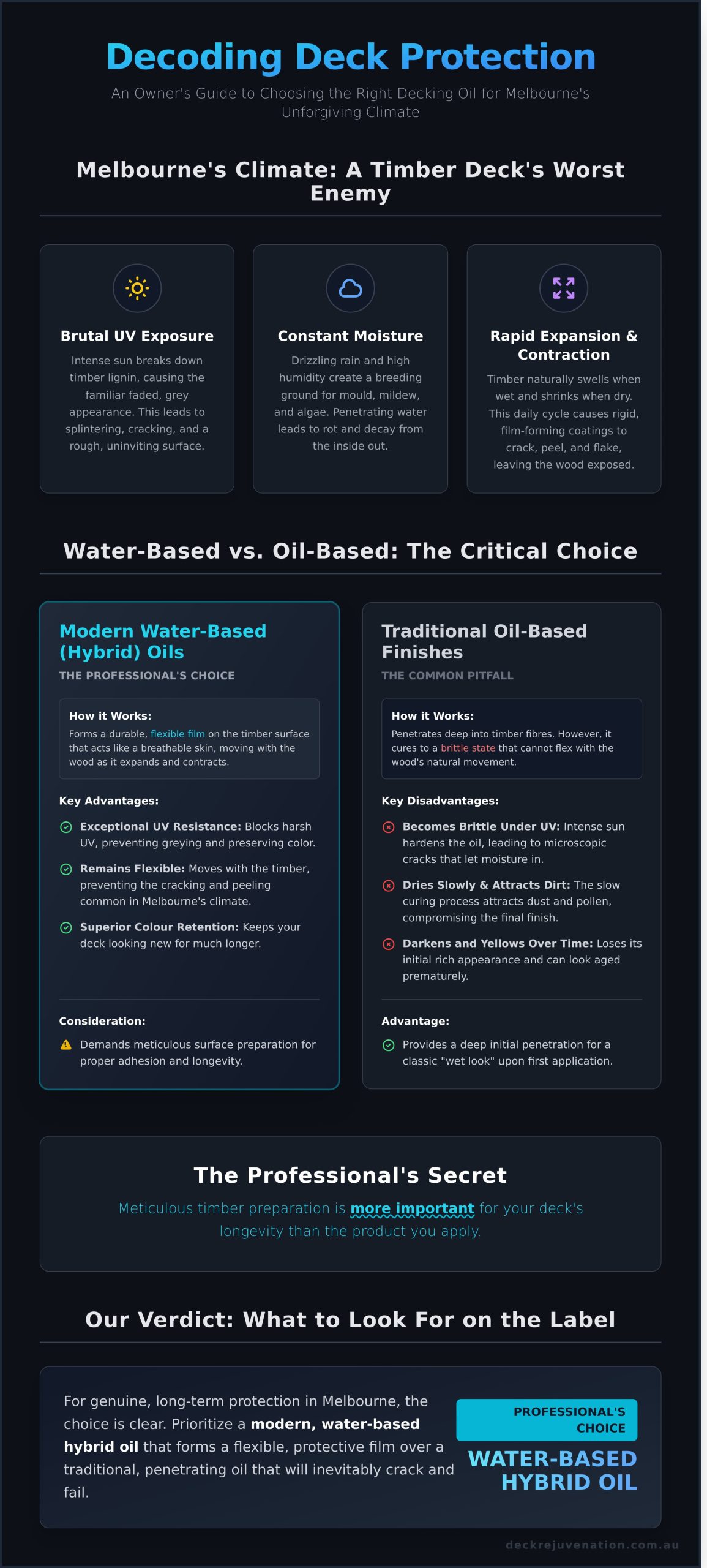
Why Melbourne’s Weather is a Timber Deck’s Worst Enemy
You’ve heard the cliché: Melbourne delivers ‘four seasons in one day’. For a timber deck, this isn’t a charming quirk; it’s a relentless assault. The constant cycling between sun, rain, and humidity creates a uniquely destructive environment that will prematurely age and damage unprotected timber. Leaving your deck exposed is not an option if you want it to last.
Think of decking oil as sunscreen for your timber. It’s not just for looks. A premium oil acts as a crucial shield, and the entire practice of Wood finishing is designed to protect the material from its greatest enemies. In Melbourne, your deck faces three distinct threats that the right oil is specifically formulated to combat.
The Brutal UV Exposure
Australia’s sun is notoriously harsh. Its intense UV radiation attacks the very structure of your deck, breaking down the lignin that binds the timber fibres together. This process is what causes the familiar faded, ‘greyed-off’ appearance. Left unchecked, it leads to splintering, cracking, and a rough, uninviting surface. Decks with north or west-facing aspects are at the highest risk, bearing the brunt of the afternoon sun day after day.
Constant Moisture and Humidity
From drizzling winter rain to heavy summer humidity, Melbourne’s climate ensures your deck is constantly exposed to moisture. This dampness creates the perfect breeding ground for mould, mildew, and algae, resulting in ugly black or green stains. More importantly, if water is allowed to penetrate the timber, it begins the process of rot and decay from the inside out, compromising the structural integrity of your investment.
Rapid Expansion and Contraction
Timber is a natural, porous material. When it gets wet, it absorbs moisture and swells. When the sun comes out and it dries, it shrinks. In Melbourne, this cycle can happen daily. This constant movement is the number one reason cheap, surface-level film coatings fail. They form a rigid layer that can’t flex with the timber, leading to the cracking, peeling, and flaking you often see on poorly maintained decks. This destructive cycle proves why choosing the best decking oil for Melbourne weather must prioritise a flexible, penetrating formula over a simple surface coat.
Water-Based vs. Oil-Based: The Critical Choice for Melbourne’s Climate
When it comes to protecting your deck, no decision is more important than your choice of coating. Forget the marketing hype on the tin; the real difference comes down to how the product works. Does it soak deep into the timber, or does it form a protective film on top? Understanding this is the key to finding the best decking oil for Melbourne weather and avoiding a finish that fails in under a year.
This isn’t a matter of opinion. It’s a matter of chemistry and how materials respond to relentless expansion, contraction, and UV exposure.
Traditional Oil-Based (Solvent) Finishes
Traditional oils work by penetrating the timber fibres, which gives the deck a rich, deep colour that looks fantastic right after application. However, their weaknesses are quickly exposed by Melbourne’s climate. Core principles of timber durability design show that constant UV and moisture cycles are the primary cause of degradation. Oil-based finishes are less flexible once cured; intense sun makes them brittle. As your timber expands and contracts, the hardened oil can’t move with it, leading to microscopic cracks that let moisture in. They also dry slowly, attracting dust and pollen, and have a tendency to darken and yellow significantly over time.
- Pros: Deep initial penetration for a classic, wet look.
- Cons: Dries slowly, attracts surface dirt, darkens with age, and becomes brittle under UV, leading to premature failure.
Modern Water-Based (Hybrid) Oils
This is the professional’s choice, and for good reason. Modern water-based oils are advanced acrylics that form a durable, flexible film on the surface of your timber. This film acts like a breathable skin for your deck. It is tough enough to block harsh UV radiation, which means your deck’s colour stays true for far longer. Most importantly, it is flexible. When Melbourne’s notorious temperature swings cause your timber to expand and contract, this coating moves with it. This prevents the cracking and peeling that is so common with inferior products, providing genuine, long-term protection. While they demand meticulous surface preparation-they simply won’t adhere to a dirty or poorly sanded deck-the superior longevity is undeniable.
- Pros: Exceptional UV resistance, remains flexible with timber movement, superior colour retention, and easy water cleanup.
- Cons: Requires flawless surface preparation to adhere properly.
For a city with blistering summer sun and damp, cold winters, the choice is clear. The superior flexibility and UV-blocking power of a premium water-based oil ensures your investment stays protected for years, not just a single season.
The Professional’s Secret: Why Flawless Preparation Outweighs the Product
Let’s be direct: you can buy the most expensive, highly-rated decking oil on the market, but it will fail in under a year if applied to a poorly prepared deck. This is the single biggest mistake we see homeowners and unqualified contractors make. They confuse a quick “clean” with genuine restoration, and the results are always disappointing.
The weekend DIY approach often involves a blast with a pressure washer and a quick coat of oil. This is a shortcut, and we have a strict no-shortcuts philosophy. A professional process isn’t about making the deck look clean for a day; it’s about systematically preparing the timber so the oil can penetrate deep into the grain and provide lasting protection. The product is only as good as the surface it’s applied to. That’s why finding the best decking oil for Melbourne weather is only half the battle; the real work happens before a single drop of oil is applied.
Beyond a Simple Pressure Wash: The Need for Sanding
Pressure washing alone is often more damaging than helpful. It can fur up the timber grain and inject water deep into the boards, trapping moisture. Crucially, it does not remove old, failed coatings or the top layer of dead, grey fibres. Sanding is the only non-negotiable step. It mechanically strips the deck back to fresh, raw timber, opening the pores to allow for maximum oil penetration and a truly durable bond.
Fixing ‘Cupping’: The Problem Most Won’t Touch
Have you noticed the edges of your deck boards curling upwards? This is called ‘cupping’, and it’s a major issue that traps water and promotes rot. Most companies will just coat right over it. We do the opposite. Our meticulous 5-wave sanding process is designed to rectify this issue, levelling the boards to create a flat, uniform surface. This not only looks infinitely better but ensures an even finish and prevents water from pooling.
The Final Steps: Cleaning and Brightening
After sanding, the timber pores are full of fine dust that must be completely removed. We then apply a professional-grade timber brightener containing oxalic acid. This crucial step neutralises the timber’s pH and removes tannin stains. This “resets” the wood, ensuring the oil’s colour comes through true and consistent across the entire deck, without any dark or patchy sections. These meticulous steps are the foundation of a flawless result. See our 9-step process that guarantees a perfect finish.
Our Verdict: What to Look For on the Label (And What We Use)
Navigating the hardware store aisle can be confusing. Every brand promises the world, but most products are not created equal, especially when facing Melbourne’s punishing climate. The secret isn’t finding a magic brand; it’s about understanding the technology in the tin. You need to look past the marketing and analyse the product’s formulation.
Ultimately, the specific brand you choose is far less important than the quality of the preparation beneath it. No oil, no matter how expensive, can save a poorly sanded or cleaned deck. The oil is the final step, not a shortcut to a great finish.
Your Melbourne Decking Oil Checklist
To find the best decking oil for Melbourne weather, ignore the flashy labels and look for these non-negotiable features. A quality product for your deck must have:
- A Water-Based Formula: Modern water-based (or acrylic) oils offer superior flexibility. As your timber expands and contracts with Melbourne’s wild temperature swings, the finish moves with it, drastically reducing the risk of cracking and peeling seen in older, more rigid oil-based products. They also provide better UV resistance.
- A Penetrating Formula: You want an oil that soaks into the timber grain, nourishing it from within. Avoid film-forming products that sit on the surface like a coat of paint. These “coatings” will inevitably peel, flake, and trap moisture, leading to a much bigger and more expensive stripping job down the line.
- Strong UV & Mould Inhibitors: The label should explicitly mention UV blockers and mould/mildew resistors. Melbourne’s combination of intense sun and damp winters makes these additives essential for preventing greying, discolouration, and rot.
- Hardwood Suitability: Ensure the product is specifically formulated for dense Australian hardwoods like Merbau, Spotted Gum, and Jarrah. These timbers have unique properties and require an oil that can properly penetrate their tight grain.
The Professional Choice: Premium Water-Based Penetrating Oils
At Deck Rejuvenation, we exclusively use premium, water-based penetrating oils. Our current product of choice is Haymes H2Oil. This isn’t a paid advertisement; it’s an honest reflection of what works best in the field after years of testing. It meets every point on our checklist and has proven its durability on hundreds of local decks.
The reason is simple: it delivers exceptional protection and simplifies long-term maintenance. When it’s time for a refresh, a properly maintained deck coated with a penetrating oil only needs a thorough clean and a single recoat-no back-breaking sanding required. But here’s the critical point: its performance is entirely dependent on our meticulous preparation process. Without a perfectly sanded, clean, and neutralised surface, even the best oil will fail. If you want to discuss how the right preparation can guarantee a lasting finish for your deck, get in touch for some honest advice.
Maintaining Your Deck: How to Protect Your Investment
Selecting the right oil is the first critical step, but even the best decking oil for Melbourne weather requires a simple maintenance plan. Your deck is a significant investment, and protecting it from our city’s harsh sun and damp winters is not a “set and forget” job. Regular upkeep is the difference between a deck that lasts a decade and one that needs a costly restoration in just a few years.
Think of it like servicing your car. A small amount of preventative care ensures longevity and performance, saving you from major, expensive repairs down the line. The same principle applies directly to your timber deck.
Annual Maintenance Checklist
Consistent, simple actions are your deck’s best defence. We recommend this straightforward checklist to keep your timber in prime condition:
- Regular Sweeping: Don’t let wet leaves, gumnuts, and other debris sit on your deck. They trap moisture and can cause tannin stains and promote mould growth, which degrades the oil’s protective layer.
- Immediate Spill Cleanup: Accidents happen. Whether it’s grease from the BBQ or a spilled glass of red wine, clean it up immediately with a damp cloth to prevent it from soaking into the timber and causing a permanent stain.
- The Water Bead Test: The simplest way to check your oil’s integrity. Sprinkle a few drops of water onto the deck. If they bead up on the surface, your protection is holding strong. If the water soaks in quickly and darkens the timber, it’s a clear sign your deck is thirsty and needs a recoat.
When to Recoat Your Deck
Your deck will tell you when it needs attention. Look for signs that the timber is losing its lustre, appears dry or grey, and absorbs water instantly. For a deck in Melbourne with high sun and rain exposure, a maintenance recoat is typically needed every 12 to 18 months.
The key is to act before the timber is completely exposed. Applying a single maintenance coat to a prepared surface is a fast and cost-effective process. Waiting until the timber is grey, cupped, and splintering means you’re facing a full-scale restoration, which involves aggressive sanding and is far more labour-intensive and expensive. Proactive maintenance is always the smarter, more economical choice. If you’re unsure about your deck’s condition, we provide honest, expert advice. Book a professional assessment for your deck’s health.
The Final Coat: Your Deck’s Ultimate Defence
Choosing the right protection for your deck comes down to two non-negotiable truths. First, Melbourne’s relentless four-seasons-in-a-day climate will destroy timber that isn’t properly protected. Second, and most critically, the most expensive product in the world will fail if the preparation is rushed. Meticulous preparation isn’t just a step; it’s the entire foundation of a long-lasting finish.
Ultimately, finding the best decking oil for Melbourne weather is less about the specific tin you buy and more about a complete system that guarantees deep penetration and genuine, lasting protection from the elements.
Why risk a weekend of back-breaking work for a finish that peels in six months? As a family business with 17+ years spent restoring decks across Melbourne’s northern suburbs, we’ve perfected our meticulous 9-step restoration process, including five waves of precision sanding. We provide honest advice and never take shortcuts. Stop guessing. Get an honest, expert assessment for your Melbourne deck.
Your deck is a valuable part of your home. Give it the professional protection it deserves and enjoy it for years to come.
Frequently Asked Questions
How often should I oil my deck in Melbourne?
Melbourne’s harsh, fluctuating weather is tough on timber. For a fully exposed deck, expect to recoat every 6-9 months to maintain protection. If your deck is undercover and protected from the worst of the sun and rain, you might get 12-18 months. Ignore the claims on the tin; watch your deck instead. When water starts soaking in rather than beading on the surface, it’s time to act. Consistent maintenance is always better than a costly restoration.
What is the best decking oil for Merbau timber in Victoria?
For a dense hardwood like Merbau, a deep penetrating oil is essential. We avoid film-forming products that sit on the surface, as they are prone to peeling and cracking under the Victorian sun. The best results come from high-quality, oil-based products that nourish the timber from within. We use premium oils specifically formulated for our local climate and hardwoods, ensuring the timber is protected and its natural grain is enhanced for a finish that lasts.
Can I apply a water-based oil over an old oil-based coating?
Absolutely not. This is a common shortcut that leads to failure. A water-based coating cannot penetrate an existing oil-based layer. It will simply sit on top, unable to bond with the timber, and will peel and flake within months. The only correct method is to completely strip the old coating back to bare wood. It’s the hard work that many skip, but it’s non-negotiable for a professional, long-lasting result. There are no shortcuts to a quality finish.
Is a more expensive decking oil actually worth the money?
Yes, without question. Cheaper oils are a false economy. They typically contain lower-quality resins and less UV-blocking pigment, meaning they break down faster and offer poor protection. You’ll find yourself recoating far more frequently, costing more in the long run. Investing in the best decking oil for Melbourne weather ensures superior penetration, durability, and longer-lasting protection. It’s the difference between a deck that survives and a deck that thrives.
Why has my new decking oil gone patchy or sticky?
A patchy or sticky finish is a clear sign of improper preparation or application. Stickiness occurs when excess oil is applied and not wiped off, preventing it from curing properly. Patchiness is usually caused by an unevenly cleaned or sanded surface, which stops the oil from penetrating uniformly. A meticulous preparation process-involving a deep clean and precision sanding to open the timber’s grain-is the only way to guarantee a smooth, even, and durable finish.
Do I need to oil a brand new deck straight away?
No, you need to wait. New timber, especially hardwoods like Merbau, is rich in natural oils and tannins that will prevent your decking oil from penetrating. You must let the deck “weather” for 4-6 weeks. This allows rain and sun to leach out these extractives. After weathering, a thorough clean with a specialised deck cleaner is essential to remove any remaining residue. Oiling a new deck too soon is a waste of time and money.
Leave a Reply