
You’ve seen the price tag on a tin of WOCA oil and you’re asking the right question: is this premium product really worth the investment for a Melbourne deck? When you can grab a cheaper oil from Bunnings, it’s tough to know if you’re paying for genuine performance or just clever marketing. After years of restoring timber decks across Melbourne, we’ve seen what the sun and rain can do to a poor finish. This is our honest, on-the-tools assessment of WOCA Exterior Wood Oil and how it truly performs.
Forget the sales pitch. In this review, we cut straight to the facts. You’ll learn why its unique penetrating formula is different from the film-forming coatings that crack and peel. We’ll cover the critical preparation work that is non-negotiable for a flawless result, and give you our final verdict on whether it delivers the long-lasting, natural finish your deck deserves. By the end, you’ll have the confidence to make the right choice for your investment.
What is WOCA Exterior Wood Oil? A Professional Breakdown
When professionals choose a timber finish, we look past the marketing claims on the tin. We need a product that performs, protects, and lasts. That’s why we trust WOCA Exterior Wood Oil. This isn’t just another deck stain; it’s a premium, water-based penetrating oil born from Danish expertise in wood care. It’s designed to work with your timber, not just sit on top of it.
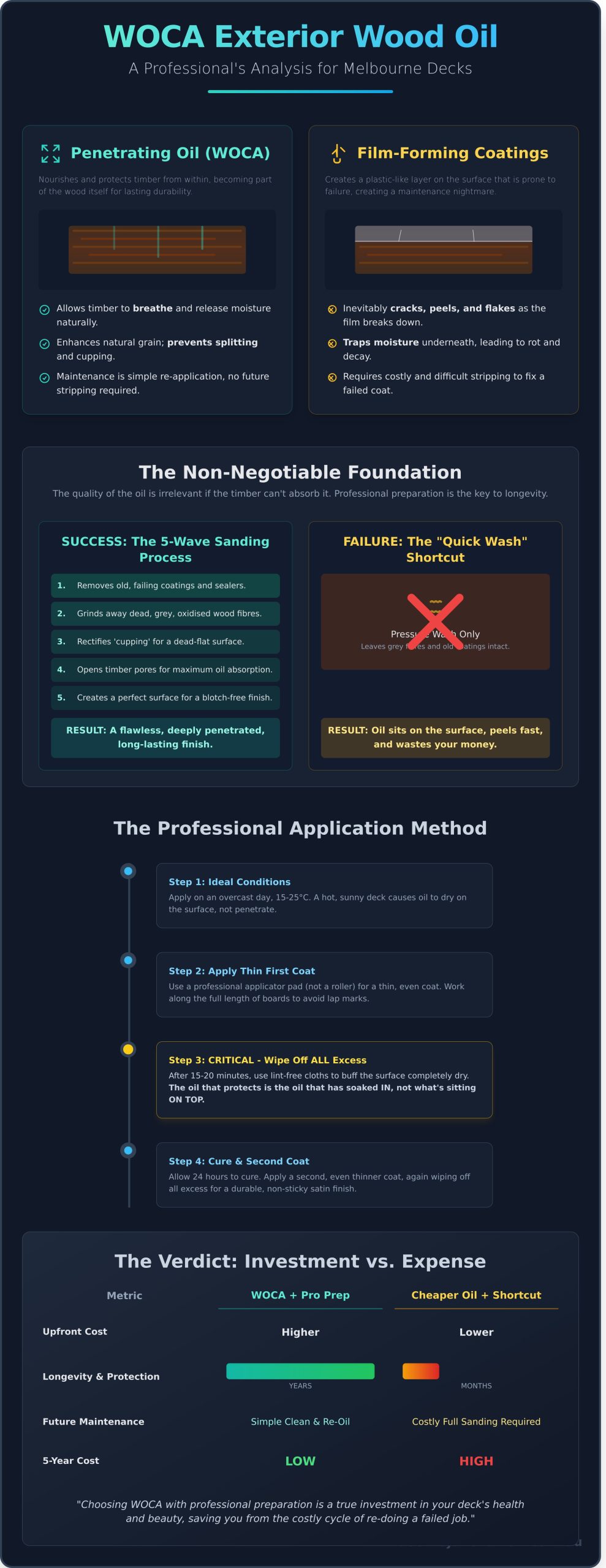
Instead of forming a surface-level film like a paint, it soaks deep into the wood fibres. This nourishes the timber from within, preventing the cracking and drying that is so common in Melbourne’s harsh, four-seasons-in-one-day weather. It’s a fundamentally different approach to wood protection, and it delivers superior, long-lasting results.
Water-Based Technology vs. Traditional Oils
The days of smelly, solvent-based oils are numbered. WOCA’s modern water-based formula is low in VOCs (Volatile Organic Compounds), making it safer for your family and the environment. Cleanup is simple with water, not harsh chemicals. Most importantly, this technology allows the timber to breathe, letting moisture escape naturally instead of trapping it under a coating where it can cause rot and decay.
How Penetrating Oils Protect Timber from the Inside Out
Many cheap coatings are “film-forming,” meaning they create a plastic-like layer on the wood’s surface. This film inevitably cracks, peels, and flakes, creating a maintenance nightmare. A penetrating oil is different. It becomes part of the wood itself, which is a critical goal in the process of wood finishing for longevity. By saturating the timber, it enhances the natural grain and texture while stabilising the fibres to prevent splitting and cupping.
Built-in UV Protection & Fungicides
The Australian sun is relentless, breaking down timber fibres and turning your deck grey. WOCA Exterior Wood Oil contains special pigments that act like a sunscreen for your deck, providing crucial UV resistance. Furthermore, it’s formulated with fungicides that actively inhibit the growth of mould, mildew, and algae. This isn’t just about looks; it’s a long-term investment in the structural health and beauty of your timber.
The Critical First Step: Why Professional Sanding is Non-Negotiable for WOCA Oil
Let’s be direct: applying a premium product like WOCA Exterior Wood Oil to an unprepared deck is a complete waste of money. The quality of the oil is irrelevant if the timber can’t absorb it properly. This single step-meticulous, professional sanding-is what separates a finish that looks good for a few months from one that protects your deck for years. The science behind professional wood finishing is clear: surface preparation dictates the performance and longevity of any coating. Skipping this critical work is not a shortcut; it’s a guaranteed failure.
Removing Old Coatings and Grey, Weathered Fibres
Many people believe a quick clean is enough. It isn’t. WOCA oil is a penetrating finish, meaning it needs to soak deep into the timber grain. It simply cannot get through old, peeling stains, failing oils, or surface sealers. Furthermore, that silver-grey layer on your deck isn’t just colour-it’s dead, oxidised wood fibre. Leaving it in place is like painting over rust. We must sand back to clean, healthy, raw timber to give the new oil a fresh surface to bond with.
Our 5-Wave Sanding Process: The Secret to Maximum Penetration
This is where true craftsmanship makes a difference. We don’t just give your deck a quick once-over. Our 5-wave sanding process uses a succession of grits to do two things perfectly. First, it rectifies ‘cupping’ and removes high spots, creating a dead-flat surface. Second, it systematically opens up the timber’s pores to the ideal state for maximum oil absorption. This meticulous approach is the only way to guarantee the even, blotch-free, and deeply penetrated finish that a high-quality WOCA Exterior Wood Oil application deserves.
The Cost of ‘No Shortcuts’ vs. The Price of Redoing a Bad Job
The common industry shortcut is a quick pressure wash and a “slap on a coat” job. It looks okay for a moment, but it fails fast. The oil sits on the surface, unable to penetrate the grey fibres or old coatings, and quickly peels, fades, or wears away. Within a year, you’re facing a bigger, more expensive problem. Investing in proper preparation upfront saves you from the cost and headache of a full-scale restoration down the track. See our meticulous 9-step restoration process.
Applying WOCA Exterior Oil: The Professional Method
Meticulous preparation gets your timber ready, but your application technique determines the final result. This is where a professional finish is made or broken. A premium product like WOCA Exterior Wood Oil demands a precise method; get it wrong, and you end up with a sticky, dust-collecting mess. We’ll walk you through the key steps professionals take-focusing on timing, tools, and temperature-to achieve that durable, non-sticky, satin finish that protects for years.
Ideal Conditions and Essential Tools
You cannot fight the weather. Applying oil in direct sun or on a hot deck is a recipe for failure, as the oil will flash-dry on the surface instead of penetrating the timber. The ideal conditions are an overcast day with temperatures between 15-25°C and no rain in the forecast. Your tools also matter immensely. Ditch the cheap roller; it applies the oil too thickly. We use a professional-grade, wide applicator pad on a pole to ensure a thin, even coat. Most importantly, the deck must be completely dry after cleaning-any trapped moisture will compromise the finish from below.
The Two-Coat Application and Buffing Process
The WOCA system is about feeding the timber, not flooding it. First, apply a thin, even coat, working along the full length of a few boards at a time to avoid lap marks. Now for the most crucial step: after 15-20 minutes, you must wipe away all excess oil from the surface with clean, lint-free cloths. The oil that protects your deck is the oil that has soaked in, not what is sitting on top. This process ensures the finish hardens within the wood fibres, a principle supported by extensive Forest Products Laboratory research on how penetrating oils work. After 24 hours, apply a second, even thinner coat, again wiping off all excess. For a premium result, a final buff with a slow-speed polisher hardens the surface, creating a beautiful, water-resistant sheen.
Common DIY Mistakes That Ruin the Finish
We are often called to fix decks where the application has gone wrong. Almost every failure comes down to one of these three common mistakes:
- Applying the oil too thickly. The “more is better” mindset is wrong for penetrating oils. A thick coat will not cure properly, remaining tacky for weeks and attracting dirt.
- Failing to wipe off the excess. This is the number one error. If you leave a layer of oil on the surface, it creates a soft, sticky film that offers no real protection and looks terrible.
- Applying in direct sunlight. The heat forces the oil to dry on the surface before it has a chance to soak into the timber, resulting in a blotchy, inconsistent finish that is prone to failure.
Choosing the Right WOCA Finish for Your Timber Deck
Selecting a colour for your deck isn’t as simple as picking a shade from a chart. The final result is a combination of the oil’s pigment and the natural colour and porosity of your timber. A finish that looks perfect on a sample of Spotted Gum will appear completely different on Merbau. Getting this choice right is critical when using a premium product like WOCA Exterior Wood Oil, as it ensures you not only protect your investment but also complement your home’s aesthetic.
The key is to understand that you are enhancing the timber, not painting over it. The oil penetrates the wood fibres, so the final shade is always a partnership between the product and the material itself.
Popular WOCA Colours and Their Effects
WOCA offers a curated range of colours, with popular choices like Natural, Teak, Bangkirai, and Merbau leading the way in Australia. ‘Natural’ is designed to enrich the existing colour of your timber, while pigmented options like ‘Teak’ add a rich, golden-brown hue. It’s crucial to understand this: pigmented oils offer substantially better UV protection than clear or natural finishes. The pigment acts as a physical barrier against the harsh Australian sun, preventing your deck from greying prematurely.
Our advice is non-negotiable: always test your chosen colour on an offcut or a hidden section of your deck first. This is the only way to see exactly how the oil will react with your specific timber.
Best Practices for Common Australian Timbers
Australian hardwoods have unique properties that affect oil absorption. Dense, oily timbers like Merbau and Jarrah are rich in tannins and require meticulous preparation to ensure the WOCA Exterior Wood Oil can penetrate deeply. Skipping a thorough cleaning and brightening stage will lead to a patchy, short-lived finish that sits on the surface instead of protecting from within.
Conversely, lighter timbers such as Blackbutt or Victorian Ash absorb oil differently and will display the pigment more prominently. A heavily pigmented oil can sometimes look unnatural on these species. We often find a lighter tint works best, preserving the timber’s natural character. This same principle applies when using the oil on other exterior timber like furniture, screens, and cladding.
Ultimately, the timber dictates the final look. If you’re unsure which finish will best suit your deck and home, a professional assessment is the only way to guarantee a premium result. We provide honest, upfront advice to ensure you make the right choice, avoiding costly mistakes down the line.
Long-Term Care for Your WOCA-Treated Deck
You’ve invested in a premium, penetrating oil finish. Unlike paints or cheap surface coatings that eventually crack and peel, your deck is protected from within. But a premium finish deserves proper maintenance to maximise its lifespan and protect your timber. The good news is that the days of back-breaking sanding every few years are over. The goal is a simple clean and re-coat process that keeps your deck looking pristine year after year.
The Annual Maintenance Schedule
We recommend a simple, proactive schedule. Give your deck a thorough wash with WOCA Exterior Cleaner twice a year-once in spring and once in autumn is ideal. This removes built-up grime, pollen, and any mildew spores before they take hold. You’ll know a maintenance coat is needed when the timber starts to look a little dry or faded, or when water no longer beads on the surface. A word of warning: never use a high-pressure washer jet on your deck. It can permanently damage the wood fibres, creating a fuzzy, splintered surface that’s difficult to rectify.
The Simple Re-oiling Process
Herein lies the biggest advantage of a genuine penetrating oil. The maintenance process for WOCA Exterior Wood Oil is incredibly straightforward and avoids the build-up that causes film coatings to fail. There is no sanding, no stripping, and no mess.
- Step 1: Clean. Give the deck a complete wash with WOCA Exterior Cleaner and allow it to dry for at least 24 hours.
- Step 2: Re-coat. Apply one single, thin maintenance coat of the oil.
That’s it. Because the oil penetrates the timber rather than sitting on top, you’re simply nourishing the wood and replenishing the finish, not adding another thick layer destined to peel.
Expected Lifespan in Melbourne’s Climate
In Melbourne’s harsh climate, a realistic expectation for longevity is key. For decks with high sun exposure and regular foot traffic, you should plan for a maintenance coat every 12 to 18 months. Shadier, more protected areas may last longer. The key is to re-coat based on the condition of the timber, not a rigid calendar. If you’re unsure whether your deck is ready for a refresh, we can provide an honest, professional assessment. Book an annual deck maintenance check with our experts.
Protect Your Investment: The Professional WOCA Difference
As we’ve covered, WOCA Exterior Wood Oil is a premium product offering deep, nourishing protection for Melbourne’s timber decks. But its ultimate success isn’t just in the can; it’s in the preparation. A flawless, long-lasting finish is impossible without meticulous, professional sanding to ensure the oil penetrates deeply and evenly, preventing the peeling and premature failure common with shortcut methods.
At Deck Rejuvenation, we don’t take shortcuts. With over 17 years of experience, our family business is built on honest advice and superior workmanship. Our signature 5-wave sanding process is non-negotiable because it guarantees the perfect foundation that a premium oil like WOCA deserves, ensuring your deck is protected properly from the harsh Melbourne climate.
If you’re ready to see the difference a genuine professional can make, we’re here to help. Get a Quote for a Professional Deck Rejuvenation Using Premium WOCA Oil today and invest in a beautiful, durable finish that will last for years to come.
Frequently Asked Questions About WOCA Exterior Oil
Is WOCA Exterior Oil better than a traditional oil-based decking oil?
Yes, it represents a significant step up in technology. Traditional oils sit on the surface, forming a film that can crack and peel. WOCA is different. It’s a water-based penetrating oil that soaks deep into the timber and hardens from within. This nourishes the wood, prevents flaking, and provides superior, longer-lasting protection against the harsh Australian climate. It’s the professional’s choice because it works with the wood, not just on top of it.
How long does WOCA Exterior Oil take to dry and cure?
Under typical conditions, the oil will be touch-dry in approximately 4-6 hours. You can allow light foot traffic after 24 hours. However, the critical phase is the full cure, where the oil completely hardens within the wood fibres. This takes 48-72 hours. We always advise clients to keep heavy items and furniture off the deck for at least 3 days to ensure maximum durability and a flawless finish. Rushing this process compromises the result.
Can I apply WOCA oil over an old, existing coating without sanding?
Absolutely not. Attempting to apply WOCA over an old coating is a guaranteed failure and a shortcut we would never take. For the oil to penetrate and protect the timber, it needs direct access to clean, bare wood. Any existing film will block this process, causing the new coat to fail quickly. Proper preparation, which always includes a complete sanding to remove the old finish, is the only way to achieve a professional, long-lasting result.
Is a WOCA-finished deck slippery when it gets wet?
A key advantage of WOCA Exterior Wood Oil is that it does not create a thick, plastic-like film on the surface, which is what typically makes decks slippery. Because it’s a penetrating finish that hardens inside the wood, it preserves the natural texture and grip of the timber. This means a WOCA-treated deck offers a much better slip-resistance profile when wet compared to decks coated with heavy, film-forming varnishes or cheap oils.
What’s the cost difference between a DIY WOCA application and a professional service?
For a DIY project on a standard 20 square metre deck, expect to spend around A$400-A$600 on materials and hiring a quality sander. A professional service for the same deck, which includes our meticulous sanding and preparation process, typically costs between A$1,500 and A$2,500. You are paying for expertise, industrial-grade equipment, and a guarantee that the job is done right the first time, avoiding costly mistakes that can damage your timber permanently.
Does WOCA Exterior Oil hide the natural grain of the wood?
Quite the opposite. WOCA is specifically formulated to enhance and celebrate the natural beauty of the timber, not conceal it. As a translucent, penetrating oil, it soaks into the wood to accentuate the depth, colour, and character of the grain. Unlike opaque paints or heavy stains that cover the wood, WOCA provides a rich, matte finish that lets the unique patterns of your Merbau, Spotted Gum, or other timber shine through beautifully.
Leave a Reply